
Teeth Scaling in Hisar
Even with regular brushing, plaque can collect in areas that are difficult to clean. When plaque remains on the teeth, it can harden into tartar or dental calculus. Unlike soft plaque, hardened tartar cannot be removed effectively with a regular toothbrush and requires professional dental cleaning.
At Virender Dental Care, we provide professional teeth scaling and polishing in Hisar to remove plaque, tartar and selected surface stains from the teeth.
Your teeth and gums will be examined by Dr. Mohit Jakhar – Endodontist & Implantologist (BDS, MDS) before treatment. The cleaning procedure will then be planned according to the amount of tartar present and the condition of your gums.
What is Teeth Scaling?
Teeth scaling is a professional dental-cleaning procedure used to remove plaque and hardened tartar from the surfaces of the teeth and around the gumline.
Specialised dental instruments are used to clean areas that cannot be adequately reached through routine brushing. Scaling may be combined with polishing to smooth the tooth surfaces and remove certain external stains.
A routine scale and polish removes deposits that have accumulated on the teeth. When gum disease has created deeper spaces between the gums and teeth, more extensive treatment known as scaling and root planing may be required below the gumline.
Why is Teeth Scaling Important?
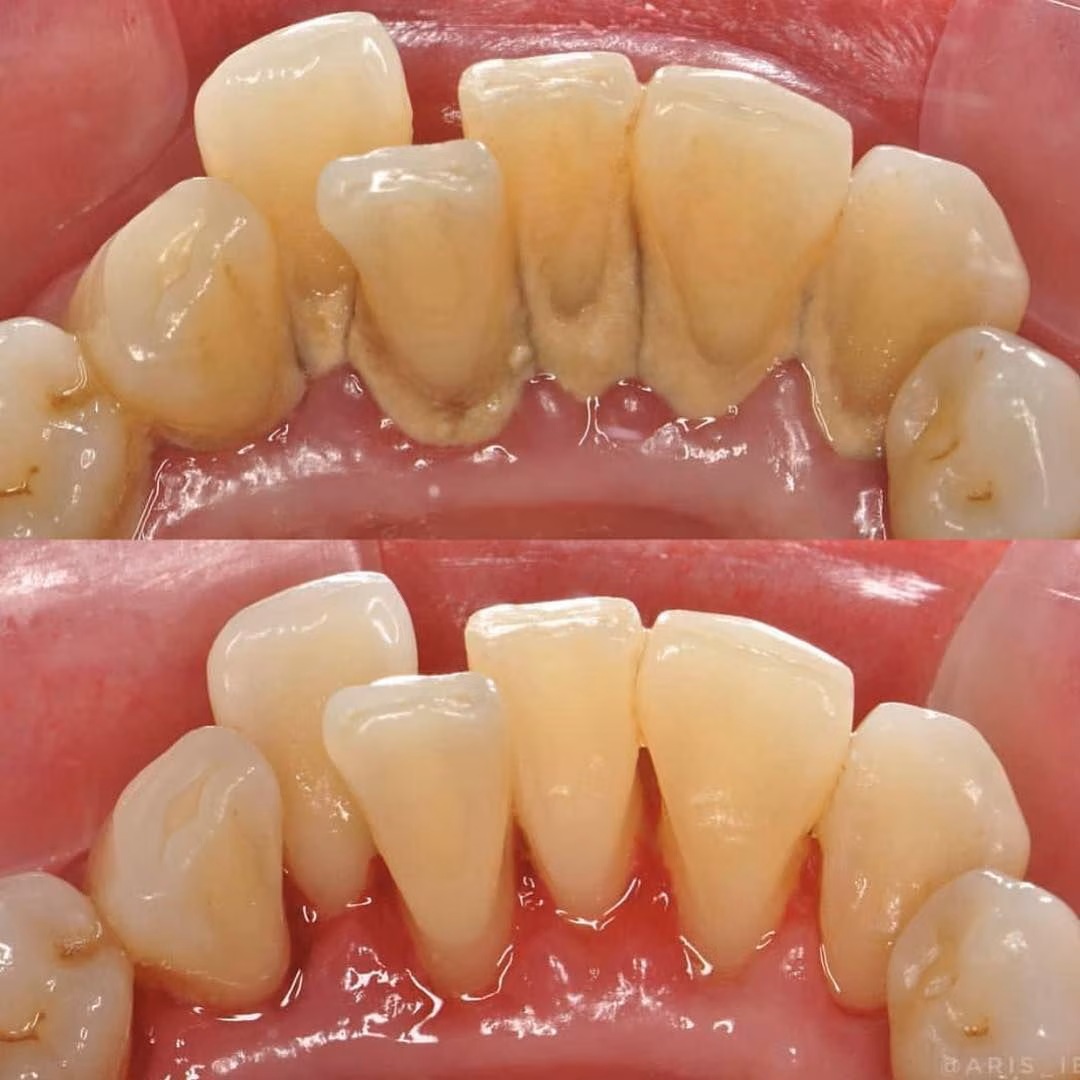
Plaque is a sticky film that continually forms on the teeth. If it is not removed through brushing and interdental cleaning, some plaque can harden into tartar.
Tartar can collect around the gumline and make it more difficult to keep the teeth clean. Plaque and tartar accumulation may irritate the gums and contribute to redness, swelling and bleeding. Persistent buildup can increase the risk of gum disease.
Professional scaling can help:
- Remove hardened tartar
- Reduce plaque accumulation
- Clean difficult-to-reach areas
- Improve gum hygiene
- Reduce certain causes of bad breath
- Remove some external stains
- Support the prevention and management of gum disease
- Make daily brushing and interdental cleaning more effective
Scaling is not a substitute for daily oral hygiene. Regular brushing, cleaning between the teeth and scheduled dental examinations remain essential.
Signs You May Need Teeth Scaling
A professional dental cleaning may be recommended when you notice:
- Yellow or brown deposits near the gumline
- Bleeding while brushing or flossing
- Red, swollen or tender gums
- Persistent bad breath
- A rough feeling on the tooth surfaces
- Visible staining from tea, coffee or tobacco
- Food frequently collecting between the teeth
- Gums beginning to pull away from the teeth
- A long interval since your previous dental cleaning
Some patients may have significant tartar buildup without pain. A dental examination can identify deposits and early gum changes before they become more noticeable.
Teeth Scaling and Polishing
Scaling and polishing are related but different parts of professional dental cleaning.
Teeth Scaling
Scaling removes plaque and hardened tartar from the tooth surfaces and around the gumline. It may be performed using hand instruments, ultrasonic instruments or a combination of both.
Teeth Polishing
Polishing is generally performed after scaling. It smooths the cleaned tooth surfaces and may remove selected external stains and residual deposits.
Polishing does not change the natural internal colour of the teeth. Patients seeking a lighter tooth shade may require a separate teeth-whitening consultation.
Routine Scaling vs Deep Cleaning
Not every patient requires the same type of dental cleaning.
Routine Teeth Scaling
Routine scaling is generally suitable when plaque and tartar are located mainly on the visible tooth surfaces and around the gumline, without advanced periodontal pockets.
Scaling and Root Planing
Scaling and root planing is a deeper, non-surgical gum treatment used when plaque and tartar have accumulated below the gumline.
During root planing, the root surfaces are carefully cleaned and smoothed to reduce bacterial deposits and support gum healing. It may be performed over more than one appointment, depending on the extent of the condition.
A periodontal examination is required to determine whether you need routine scaling or a more extensive gum treatment.
Our Teeth-Scaling Procedure
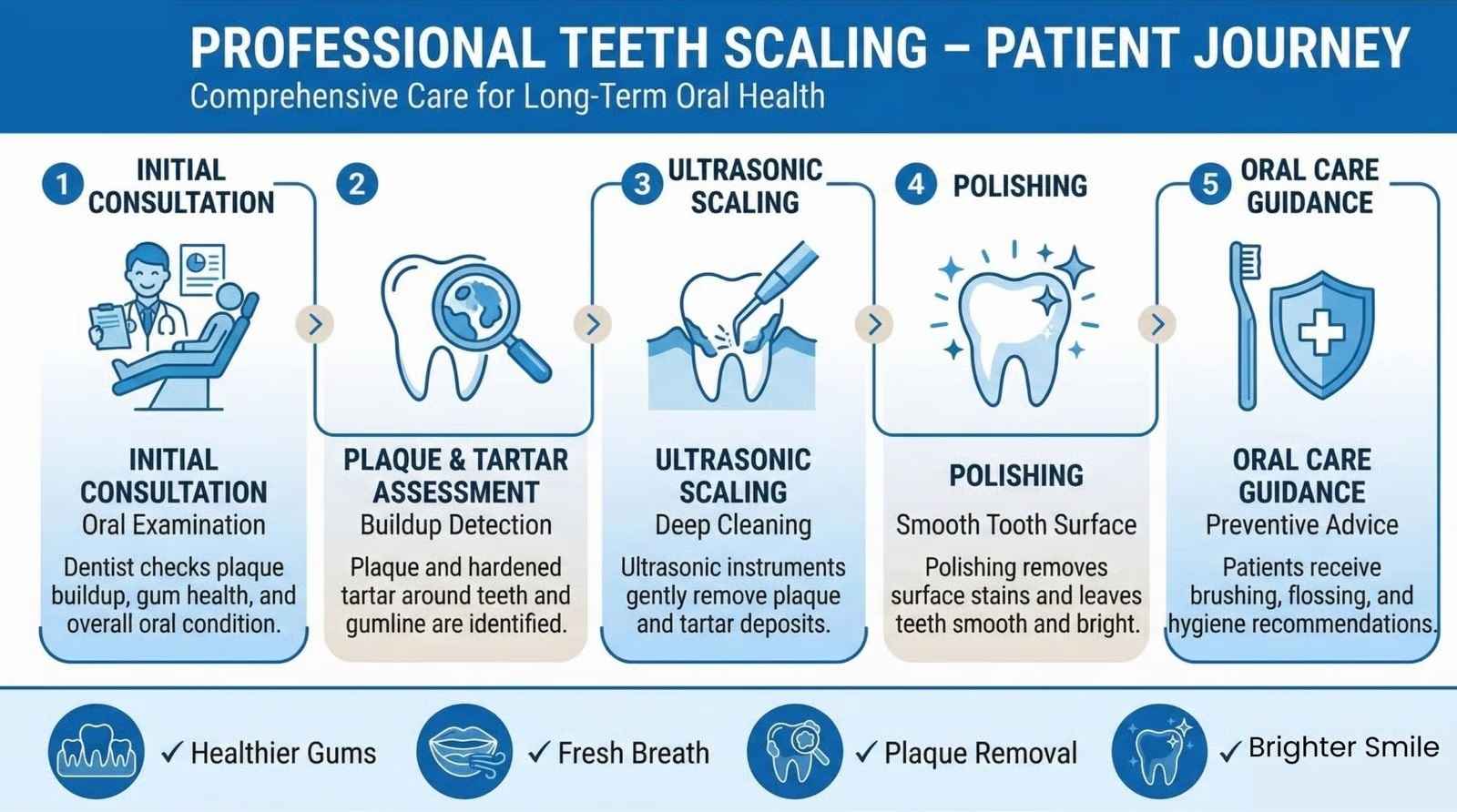
Dental and Gum Examination: Your dentist will examine your teeth, gums and existing restorations. The amount of plaque and tartar will be assessed, along with signs of gum inflammation or periodontal disease. Dental X-rays may be advised when there are signs of bone loss, deep gum pockets or other underlying problems.
Plaque and Tartar Removal: Specialised instruments are used to loosen and remove deposits from the tooth surfaces and gumline. An ultrasonic scaler may use controlled vibrations and water to break up hardened tartar. Hand instruments may also be used to clean specific areas more precisely.
- Cleaning Around the Gumline: The areas around and slightly beneath the gumline are carefully cleaned. Patients with deeper periodontal pockets may require a separate deep-cleaning procedure.
- Teeth Polishing: After tartar removal, the teeth may be polished to smooth their surfaces and reduce selected external stains.
- Oral-Hygiene Guidance: You may receive personalised advice about brushing technique, interdental brushes, flossing and cleaning difficult areas. Daily cleaning between the teeth helps remove plaque and food debris that a toothbrush may not reach adequately.
Caring for Your Teeth After Scaling
To maintain the results of professional cleaning:
- Brush twice a day with fluoride toothpaste.
- Use a soft-bristled toothbrush and gentle pressure.
- Clean between your teeth daily with floss or an interdental brush.
- Clean around crowns, bridges, implants and braces carefully.
- Limit frequent sugary snacks and drinks.
- Avoid smoking and tobacco products.
- Attend dental examinations at the recommended interval.
- Arrange another cleaning when advised by your dentist.
Good daily plaque control helps reduce gum inflammation and slows the return of tartar.
Why Choose Virender Dental Care for Teeth Scaling in Hisar?
- Personalised Gum Assessment: Your treatment begins with an examination of your teeth and gums to determine whether routine scaling or more extensive periodontal care is required.
- Professional Dental Cleaning: Appropriate instruments and clinical techniques are used to remove plaque and hardened tartar from difficult-to-clean areas.
- Focus on Patient Comfort: The procedure is adapted according to your gum condition, sensitivity and individual comfort.
- Comprehensive Dental Care: If the examination identifies cavities, gum disease, damaged restorations or other oral-health concerns, suitable treatment options will be explained.
- Oral-Hygiene Guidance: You will receive practical recommendations to help control plaque and maintain the results of your cleaning at home.
- Qualified Dental Care: Your treatment is provided under the guidance of Dr. Mohit Jakhar Endodontist & Implantologist, BDS, MDS

Frequently Asked Questions About Teeth Scaling
Professional scaling is a routinely used dental procedure for removing plaque and tartar. Your dentist will examine your teeth and gums before recommending the appropriate type of cleaning.
When performed correctly by a dental professional, scaling is intended to remove deposits from the teeth rather than healthy enamel. Attempting to scrape tartar at home with sharp objects can injure the gums and damage the teeth.
Inflamed gums can bleed when plaque and tartar are removed. Bleeding generally improves as gum inflammation reduces and daily oral hygiene becomes more effective.
The duration depends on the amount and location of tartar, gum health and the number of areas requiring cleaning. Heavy buildup or periodontal disease may require a longer appointment or treatment over multiple visits.
Most patients can eat after routine scaling. When anaesthesia has been used, wait until the numbness has reduced to avoid biting your cheek, tongue or lip. Temporarily avoid foods that trigger sensitivity.
Temporary sensitivity may occur when tartar is removed from exposed or sensitive areas. It usually reduces gradually. Your dentist may recommend a sensitivity toothpaste or other treatment when necessary.
Scaling may improve bad breath when plaque, tartar and gum inflammation are contributing factors. Persistent bad breath can also have other dental or medical causes and should be evaluated.
Soft plaque can be controlled with brushing and interdental cleaning, but hardened tartar requires professional removal.
No. Scaling removes deposits and selected surface stains. Teeth whitening uses a separate procedure to lighten the natural shade of suitable teeth.
Caring for Your Teeth After Scaling
To maintain the results of professional cleaning:
- Brush twice a day with fluoride toothpaste.
- Use a soft-bristled toothbrush and gentle pressure.
- Clean between your teeth daily with floss or an interdental brush.
- Clean around crowns, bridges, implants and braces carefully.
- Limit frequent sugary snacks and drinks.
- Avoid smoking and tobacco products.
- Attend dental examinations at the recommended interval.
- Arrange another cleaning when advised by your dentist.
Good daily plaque control helps reduce gum inflammation and slows the return of tartar.