

Dental Implants in Hisar
Missing teeth can affect much more than your smile. They may make chewing difficult, alter speech, reduce confidence, and allow nearby teeth to shift from their normal position. At Virender Dental Care, we provide personalised dental implant treatment in Hisar to replace one tooth, several teeth, or an entire arch of missing teeth.
Dental implant treatment is planned and performed under the guidance of Dr. Mohit Jakhar, Endodontist and Implantologist (BDS, MDS). Every patient receives a detailed examination before treatment to assess oral health, jawbone condition, medical history, bite, and long-term restorative requirements.
What is a Dental Implant?
A dental implant is an artificial tooth-root replacement that is surgically positioned inside the jawbone. It provides a stable foundation for a dental crown, bridge, or implant-supported denture.
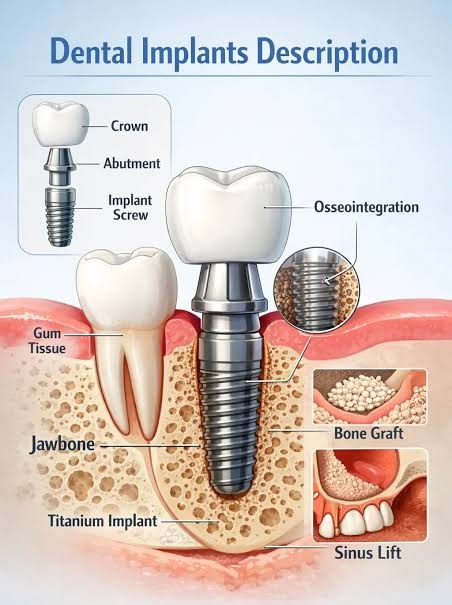
A complete dental implant restoration usually contains three main parts:
1. Dental Implant
The implant is a small screw-shaped component placed inside the jawbone. Most commonly used implant systems are made from titanium or other biocompatible materials.
2. Abutment
The abutment is a connecting component placed over the implant. It joins the implant inside the jawbone to the visible replacement tooth.
3. Crown, Bridge, or Denture
The final artificial tooth or prosthesis is attached to the abutment. It is designed according to the patient’s bite, tooth size, shape, and appearance.
After placement, the surrounding bone gradually heals around the implant in a process known as osseointegration. This healing process helps create a stable foundation for the replacement tooth.
When May You Need a Dental Implant?
Dental implants may be considered when a patient has lost teeth because of:
- Severe tooth decay
- Advanced gum disease
- Dental trauma or an accident
- A fractured or non-restorable tooth
- Failed root canal treatment
- Congenitally missing teeth
- Long-term denture-related difficulties
- Previous tooth extraction
An implant can be used to replace a single missing tooth, several missing teeth, or support a fixed or removable full-mouth prosthesis.
The most appropriate solution depends on the number and position of missing teeth, available jawbone, gum health, bite, medical history, expectations, and budget.
Requirements for Dental Implants
Not every patient can proceed directly to implant placement. A detailed dental and medical assessment is necessary to determine whether implant treatment is suitable.
1. Adequate Jawbone
The implant needs sufficient bone height, width, and density for support. If bone has reduced after tooth loss, infection, trauma, or gum disease, a bone graft or another preparatory procedure may be recommended.
Dental X-rays and, in selected cases, three-dimensional imaging may be used to assess the available bone and nearby structures.
2. Healthy Gums
The gums and tissues surrounding the proposed implant site should be healthy. Active gum disease or infection generally needs to be controlled before implant placement.
Untreated gum disease can affect the tissues and bone required to support the implant.
3. Good General Health
General health can influence healing after implant surgery. Patients should inform the dentist about:
- Diabetes
- Heart conditions
- Bleeding disorders
- Osteoporosis
- Previous radiotherapy
- Immune-related conditions
- Allergies
- Previous surgeries
- Current or recent illnesses
Medical conditions do not automatically prevent implant treatment, but they may require additional precautions, treatment modifications, or medical clearance.
4. Complete Medication History
Patients should inform the dentist about all prescribed medicines, over-the-counter medicines, supplements, blood-thinning medication, osteoporosis medication, and previous treatments.
Never stop prescribed medication without consulting the doctor who prescribed it.
5. Controlled Diabetes
Patients with diabetes may be able to receive dental implants when their condition is appropriately managed. Poorly controlled diabetes may delay healing and increase the risk of infection or implant complications.
6. No Active Dental Infection
Decay, gum infection, abscesses, and other oral health problems should generally be treated before implant placement.
7. Commitment to Oral Hygiene
Dental implants require regular cleaning, professional check-ups, and long-term maintenance. The implant itself cannot develop tooth decay, but plaque accumulation can cause inflammation and bone loss around it.
Patients must be willing to brush properly, clean around the implant, and attend follow-up visits.
8. Smoking or Tobacco Use
Smoking and tobacco use can interfere with healing and reduce the long-term predictability of dental implant treatment. Patients may be advised to stop smoking before and after implant surgery.
9. Completed Jaw Growth
Dental implants are generally considered after jaw growth is complete. Younger patients may need to wait until facial and jaw development has stabilised.
10. Manageable Bite Forces
Teeth grinding, clenching, or an uneven bite can place excessive pressure on implants. Bite correction or a protective nightguard may be recommended in suitable cases.
Types of Dental Implant Treatments
The type of treatment recommended depends on how many teeth are missing, their location, jawbone condition, and the type of final restoration required.
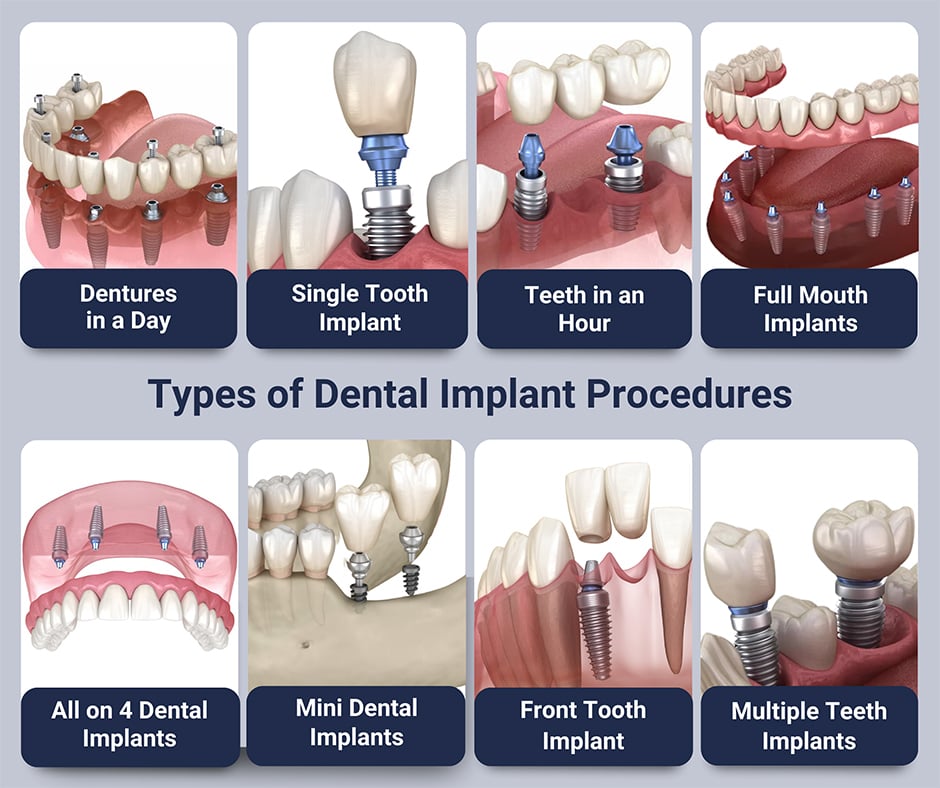
1. Single-Tooth Dental Implant
A single implant and crown may be used to replace one missing tooth.
Unlike a conventional dental bridge, this option generally does not require the neighbouring healthy teeth to be shaped for support. The crown is customised to match the surrounding teeth.
2. Multiple-Tooth Implant-Supported Bridge
When several neighbouring teeth are missing, implants can support a fixed dental bridge.
An implant is not always required for every missing tooth. The number and position of implants depend on the length of the gap, bite forces, bone availability, and treatment design.
3. Implant-Supported Overdenture
An implant-supported overdenture is a removable denture that connects to dental implants for improved support and retention.
It may offer greater stability than a conventional removable denture, particularly while eating or speaking. The denture must still be removed and cleaned according to the dentist’s instructions.
4. Fixed Full-Arch Implant Teeth
A fixed full-arch restoration may be used for patients who have lost, or are expected to lose, most or all teeth in one jaw.
Several implants are placed to support a fixed bridge. Treatment requirements depend on the jawbone, gum condition, bite, facial support, remaining teeth, and restorative plan.
5. Immediate Dental Implant Placement
In selected cases, an implant may be positioned during the same appointment in which a damaged tooth is removed.
Immediate placement is not suitable for every patient. Bone condition, infection, gum tissue, implant stability, and the location of the tooth must first be assessed.
6. Delayed Dental Implant Placement
In delayed placement, the tooth is removed and the area is allowed to heal before the implant is placed.
This may be recommended when there is infection, insufficient bone, damaged gum tissue, or another condition requiring healing or additional treatment.
7. Immediate-Load Implant Restoration
In selected cases, a temporary tooth may be connected soon after implant placement.
Immediate loading does not mean that every patient receives a final permanent crown on the same day. Adequate implant stability, bone condition, bite control, and careful case selection are essential.
8. Dental Implants with Bone Grafting
When there is insufficient jawbone, bone grafting may be recommended before or during implant placement.
A graft may increase the amount of bone available to support the implant. Depending on the case, the graft may need to heal for several months before implant treatment continues.
The Dental Implant Treatment Process
Dental implant treatment is completed in planned stages. The total treatment period varies according to the patient’s oral health, healing response, bone condition, number of implants, and need for additional procedures.
Step 1: Dental Implant Consultation
The first appointment includes a discussion about:
- Missing teeth
- Current dental problems
- Medical history
- Current medicines
- Previous dental treatment
- Smoking or tobacco use
- Desired treatment outcome
- Available replacement options
- Estimated treatment duration
- Expected cost
The dentist will also explain alternatives such as bridges and removable dentures.
Step 2: Clinical Examination
The dentist examines the:
- Missing-tooth area
- Gums
- Remaining teeth
- Jaw relationship
- Bite
- Available space
- Mouth opening
- Bone and soft tissues
- Condition of nearby teeth
The purpose is to determine whether the implant can be positioned safely and whether the final tooth can be made functional and natural-looking.
Step 3: X-Rays and Treatment Planning
Dental X-rays are used to evaluate the implant site, roots of nearby teeth, bone, and surrounding structures.
In selected cases, three-dimensional imaging may be advised to measure the available bone and assess structures such as nerves or the sinus.
Impressions, digital scans, photographs, and diagnostic models may also be used during planning.
Step 4: Preparatory Dental Treatment
Before implant placement, some patients may require:
- Treatment of gum disease
- Professional teeth cleaning
- Removal of a damaged tooth
- Treatment of cavities
- Root canal treatment
- Bone grafting
- Sinus augmentation
- Management of active infection
- Bite correction
- Temporary tooth replacement
These procedures help create a healthier and more predictable environment for the implant.
Step 5: Dental Implant Placement
Implant surgery is generally carried out under local anaesthesia.
A small opening is created in the gum, and the implant is carefully positioned inside the planned area of jawbone. The gum is then closed or adapted around the implant.
The patient may experience mild swelling, soreness, or tenderness after surgery. Post-treatment instructions are provided to support healing.
Step 6: Healing and Osseointegration
The implant is allowed to heal and integrate with the surrounding jawbone.
Healing may take several months, although the period varies according to the implant site, bone quality, additional procedures, overall health, and treatment plan. A temporary tooth may be provided when appropriate.
Step 7: Abutment Placement
After adequate healing, the connecting abutment is attached to the implant.
In some implant systems, the abutment can be placed during the original implant surgery. In others, a small additional procedure may be needed to uncover the implant.
Step 8: Impression or Digital Scan
An impression or digital scan is taken to design the final crown, bridge, or denture.
The restoration is planned according to the patient’s bite, surrounding teeth, gum contours, tooth colour, and available space.
Step 9: Final Tooth Placement
The final crown, bridge, or implant-supported denture is attached after checking:
- Fit
- Bite
- Comfort
- Appearance
- Speech
- Cleaning access
- Gum response
Minor adjustments may be needed to create a comfortable and balanced bite.
Step 10: Maintenance and Follow-Up
Regular dental visits are essential after implant treatment.
During follow-up appointments, the dentist may examine the implant, gums, bite, crown, bridge, screws, and surrounding bone. Professional cleaning may also be recommended.
Good daily cleaning and regular dental care are important for the long-term health of the implant and surrounding tissues.
Benefits of Dental Implants
- Natural-Looking Appearance: Implant crowns can be designed to match the size, shape, and colour of the surrounding teeth.
- Improved Chewing Ability: A stable implant-supported tooth can help restore chewing function in the area of the missing tooth.
- Improved Speech and Comfort: Replacing missing teeth may help patients speak and eat more comfortably, particularly when unstable dentures have been causing difficulties.
- Support for the Jawbone: Dental implants transfer functional forces to the jawbone and may help reduce bone shrinkage in the area of a missing tooth.
- Protection of Neighbouring Teeth: A single-tooth implant can often replace a missing tooth without cutting down healthy neighbouring teeth to support a conventional bridge.
- Better Denture Stability: Implants can provide additional support for removable dentures, helping reduce unwanted movement during eating and speaking.
- Replacement of One or Multiple Teeth: Dental implants can support a single crown, a bridge, a removable overdenture, or a fixed full-arch restoration.
- Long-Term Tooth Replacement: With appropriate planning, oral hygiene, professional maintenance, and healthy surrounding tissues, implants may provide a long-term tooth-replacement option.
- Improved Confidence: Replacing visible missing teeth can improve a patient’s confidence while smiling, speaking, eating, and interacting socially.
Dental Implant Cost in Hisar
The cost of dental implant treatment varies from patient to patient. An exact price cannot be provided without examining the mouth, reviewing X-rays, and identifying the required treatment.
Why Choose Virender Dental Care for Dental Implants?
- Care Under an Implantologist: Dental implant treatment is planned under Dr. Mohit Jakhar, Endodontist and Implantologist (BDS, MDS).
- Individual Treatment Planning: Each patient receives a personalised plan based on the number of missing teeth, available bone, gum health, medical history, bite, and desired result.
- Focus on Function and Appearance: Implant treatment is planned to restore comfortable chewing while creating a replacement tooth that blends naturally with the smile.
- Detailed Assessment Before Treatment: The treatment process begins with an examination and appropriate diagnostic imaging. Implant placement is not recommended without evaluating the bone, gums, bite, and surrounding structures.
- Clear Explanation of Available Options: Patients are informed about implant treatment, bridges, dentures, bone grafting, treatment stages, possible risks, expected costs, and maintenance requirements.
- Transparent Cost Discussion: A treatment estimate is explained according to the implant, abutment, crown, diagnostic tests, surgery, and any additional procedures required.
- Comfortable and Patient-Focused Care: The team aims to keep patients informed and comfortable throughout consultation, surgery, restoration, and follow-up care.
- Convenient Location in Hisar: Virender Dental Care is located opposite the Fire Station in HTM Colony, near Azad Nagar, Hisar.
Frequently Asked Questions About Dental Implants
Dental implant surgery is generally performed under local anaesthesia, which numbs the treatment area. Patients may feel pressure during the procedure but should not feel sharp pain. Mild soreness, swelling, or tenderness may occur afterward and can usually be managed according to the dentist’s instructions. Contact the clinic if pain or swelling becomes severe or continues to increase.
Dental implants may function for many years when they are properly placed, restored, cleaned, and maintained. Their lifespan depends on oral hygiene, gum and bone health, smoking, medical conditions, bite forces, restoration quality, and regular dental care. The crown or bridge attached to the implant may require repair or replacement over time because of normal wear.
Insufficient bone does not always rule out implant treatment. Depending on the location and severity of bone loss, the dentist may recommend bone grafting, sinus augmentation, a modified implant plan, or an alternative tooth-replacement option. Bone grafting can extend the overall treatment period because the new bone may need several months to heal before it can support an implant.
The complete treatment may take several months because the implant needs time to heal and integrate with the jawbone. The duration depends on the implant site, bone condition, healing response, number of implants, need for extraction or grafting, and type of final restoration. Some selected cases may receive a temporary tooth earlier, but not every patient is suitable for immediate loading.
An implant can sometimes be placed immediately after extraction, but only when the conditions are suitable. The dentist must assess the bone, infection, gum tissue, implant stability, and location of the tooth. When immediate placement is not advisable, the extraction site may be allowed to heal before implant surgery.
Book a Dental Implant Consultation in Hisar
Missing teeth do not have to prevent you from eating, speaking, or smiling confidently. A detailed consultation can help determine whether dental implants are suitable for you.
Visit Virender Dental Care for a personalised dental implant assessment.
Virender Dental Care
Opposite Fire Station, HTM Colony
Azad Nagar, Hisar, Haryana 125001
Dr. Mohit Jakhar
Endodontist and Implantologist
BDS, MDS
Call: +91 72064 25552
WhatsApp: +91 72064 25552