
Oral Surgery in Hisar
Certain dental conditions cannot be treated effectively with routine fillings, medicines or non-surgical procedures alone. Oral surgery may be required to remove impacted teeth, treat infection, manage damaged teeth or prepare the mouth for restorative and implant treatment.
At Virender Dental Care, we provide carefully planned minor oral surgical procedures in Hisar, with a strong focus on patient comfort, infection control and clear aftercare guidance.
Your condition will be evaluated by Dr. Mohit Jakhar – Endodontist & Implantologist (BDS, MDS). Following a clinical examination and necessary investigations, you will receive a personalised treatment recommendation. Complex surgical conditions may be coordinated with or referred to an oral and maxillofacial surgeon when appropriate.
What is Oral Surgery?
Oral surgery includes surgical procedures performed on the teeth, gums, jawbone and surrounding oral tissues.
Some oral surgical procedures are relatively minor and can be completed under local anaesthesia in a dental clinic. More complex cases may require specialist care, advanced imaging, sedation or treatment in a hospital setting.
Oral surgery may be advised to:
- Remove a severely damaged tooth
- Treat an impacted wisdom tooth
- Remove a tooth that cannot erupt normally
- Control infection around a tooth or jaw
- Remove retained tooth roots
- Prepare the jaw for dental implants
- Treat selected cysts or abnormal tissue
- Support restorative or prosthetic dental treatment
- Manage certain dental injuries
- Preserve surrounding teeth and oral structures
A detailed examination is required before deciding whether surgery is necessary.
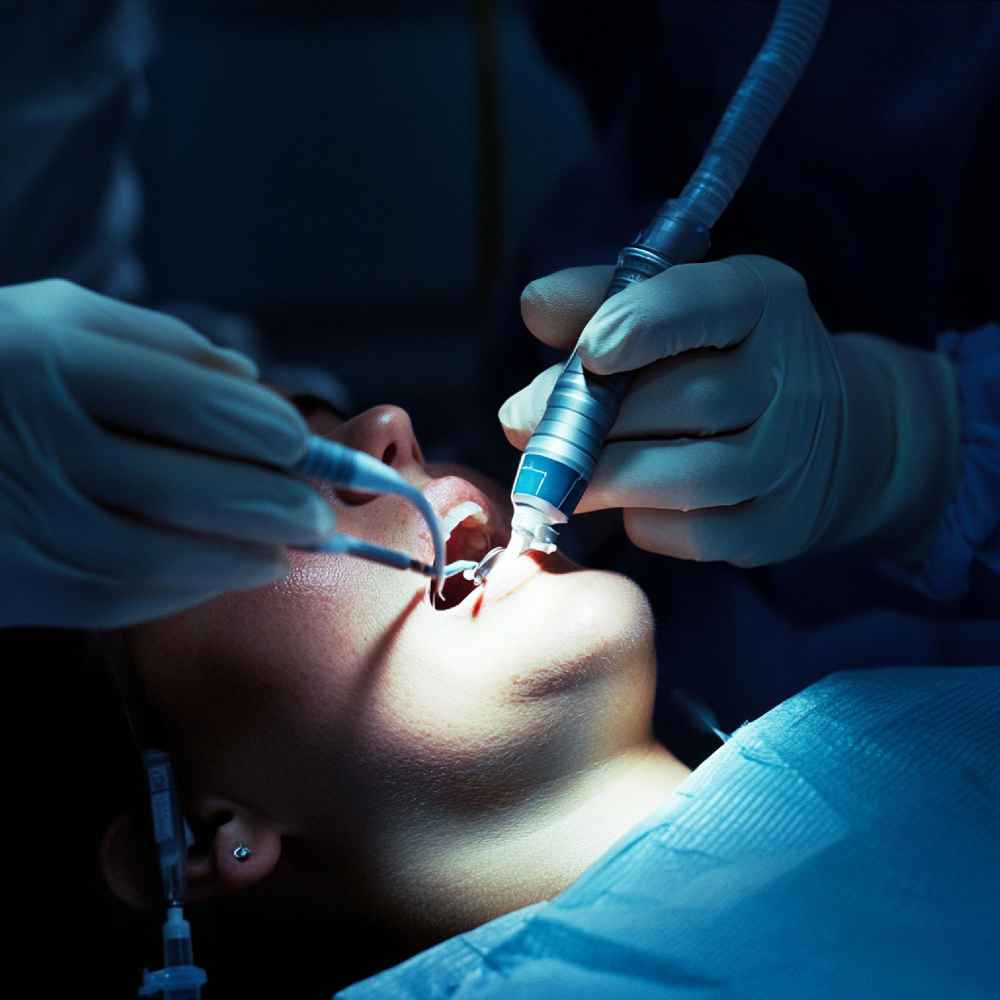
Oral Surgery Treatments
- Wisdom Tooth Removal: Impacted or partially erupted wisdom teeth may cause pain, swelling, infection, food trapping or damage to nearby teeth. Removal may be recommended when the tooth is causing repeated problems.
- Surgical Tooth Extraction: Surgical extraction may be required when a tooth is broken below the gumline, severely damaged, impacted or difficult to remove through a routine extraction.
- Retained Root Removal: Remaining tooth roots may cause pain, infection or interfere with dentures and dental implants. They can be removed after evaluating their position and surrounding structures.
- Dental Implant Surgery: Dental implants replace missing tooth roots and can support crowns, bridges or dentures. Your gums, jawbone and overall oral health will be assessed before implant placement.
- Bone Grafting: Bone grafting may be advised when there is insufficient jawbone to support a dental implant.
- Apicoectomy: An apicoectomy may be considered when infection remains near the root tip of a previously root canal-treated tooth.
- Oral Lesion Evaluation: Persistent ulcers, lumps, red or white patches and other unusual changes inside the mouth should be examined. A biopsy or specialist referral may be recommended when necessary.
Our Oral Surgery Process
- Consultation and Examination: Your symptoms, dental history and medical history will be reviewed. The affected area, surrounding teeth, gums and jaw will be examined.
- Diagnostic Imaging: Dental X-rays may be taken to evaluate the roots, bone and nearby structures. More advanced imaging may be recommended for complex extractions or implant planning.
- Treatment Discussion: The proposed procedure, alternatives, expected benefits, possible risks, recovery period and aftercare instructions will be explained.
- Anaesthesia: Many minor oral surgical procedures are performed under local anaesthesia, which numbs the treatment area while you remain awake. The appropriate pain-control approach depends on the procedure, your medical condition and the complexity of treatment.
- Surgical Procedure: The procedure is performed using suitable clinical protocols and infection-control measures. Stitches may be placed when necessary.
- Recovery and Follow-Up: You will receive instructions about medicines, diet, oral hygiene, bleeding control and activity. A follow-up visit may be scheduled to assess healing or remove stitches.
Why Choose Virender Dental Care?
- Detailed Treatment Planning: Each procedure is planned according to your dental condition, imaging findings, medical history and individual needs.
- Patient Comfort: Local anaesthesia, clear communication and step-by-step guidance help make the treatment experience more comfortable.
- Comprehensive Dental Care: Oral surgical treatment can be coordinated with root canal treatment, dental implants, crowns, bridges and dentures when required.
- Clear Aftercare Guidance: You will receive practical instructions to support healing and reduce the risk of complications.
- Appropriate Specialist Referral: More complex conditions may be referred to or coordinated with an oral and maxillofacial surgeon when specialist management is required.
- Qualified Dental Care: Your consultation and treatment planning are led by: Dr. Mohit Jakhar Endodontist & Implantologist BDS, MDS
Frequently Asked Questions
The treatment area is usually numbed with local anaesthesia before a minor oral surgical procedure. Pressure or movement may be felt, but sharp pain should not occur during treatment. Some discomfort may develop after the anaesthesia wears off.
Stitches may be used when an incision is made or when the surgical site needs additional support. Some stitches dissolve naturally, while others require removal.
You may generally eat once it is safe to do so, but soft foods are usually recommended initially. Avoid chewing near the surgical site and wait until numbness reduces to prevent accidentally biting your lip, cheek or tongue.
No. A healthy wisdom tooth that is correctly positioned, functional and easy to clean may not require removal. Monitoring may be recommended when there are no signs of disease.
Antibiotics are not automatically needed after every oral surgical procedure. They are prescribed according to the presence or risk of infection, the procedure performed and the patient’s medical condition.
The duration depends on the procedure and its complexity. A straightforward extraction may take less time than an impacted wisdom tooth removal, bone graft or implant surgery.
Initial recovery after minor oral surgery commonly takes several days, but complete healing may take longer. The recovery period varies according to the procedure, your general health and how well aftercare instructions are followed.
Some patients return to routine activities quickly, while others may need time to rest. The appropriate recovery period depends on the complexity of surgery and the nature of your work.
Not always. Some teeth may be preserved with root canal treatment, a crown or another restorative procedure. Extraction is generally considered when the tooth cannot be predictably restored or when retaining it may create further problems.
Smoking can delay healing and increase the risk of infection and dry socket. Avoid smoking and tobacco for the period advised by your dentist.
Book an Oral Surgery Consultation in Hisar
Do not ignore persistent dental pain, swelling, impacted teeth or recurrent oral infections. Early assessment can help prevent the condition from becoming more complicated.
Clinic: Virender Dental Care
Head Dentist: Dr. Mohit Jakhar – Endodontist & Implantologist, BDS, MDS
Address: Opposite Fire Station, HTM Colony, Azad Nagar, Hisar, Haryana – 125001
Schedule an appointment for an oral examination and personalised treatment recommendation.
Treatment suitability, recovery time and outcomes vary according to the procedure and the patient’s dental and medical condition. A clinical examination and appropriate diagnostic imaging are required before confirming treatment.