
Single Sitting Root Canal Treatment
Are you experiencing severe tooth pain, prolonged sehewing? An infection or inflammation inside the tooth may be the cause. At Virender Dental Care, we provide specialist-led Single Sitting Root Canal Treatment in Hisar to relieve dental pain, control infection, and preserve the natural tooth whenever clinically possible.
Treatment is performed under the supervision of Dr. Mohit Jakhar, Endodontist and Implantologist (BDS, MDS), following a careful examination of the tooth, surrounding tissues, medical history, and dental X-rays.
A single-sitting root canal treatment allows the cleaning, shaping, disinfection, filling, and sealing of the root canals to be completed during one appointment. However, not every tooth is suitable for treatment in one visit. The final decision is made only after a proper clinical and radiographic evaluation.
What is Root Canal Treatment?
A root canal treatment, also known as endodontic treatment, is a dental procedure used to treat infection or inflammation inside a tooth.
A healthy tooth has three principal layers:
- Enamel: The hard outer layer of the tooth
- Dentin: The layer beneath the enamel
- Dental pulp: The soft inner tissue containing nerves, blood vessels, and connective tissue
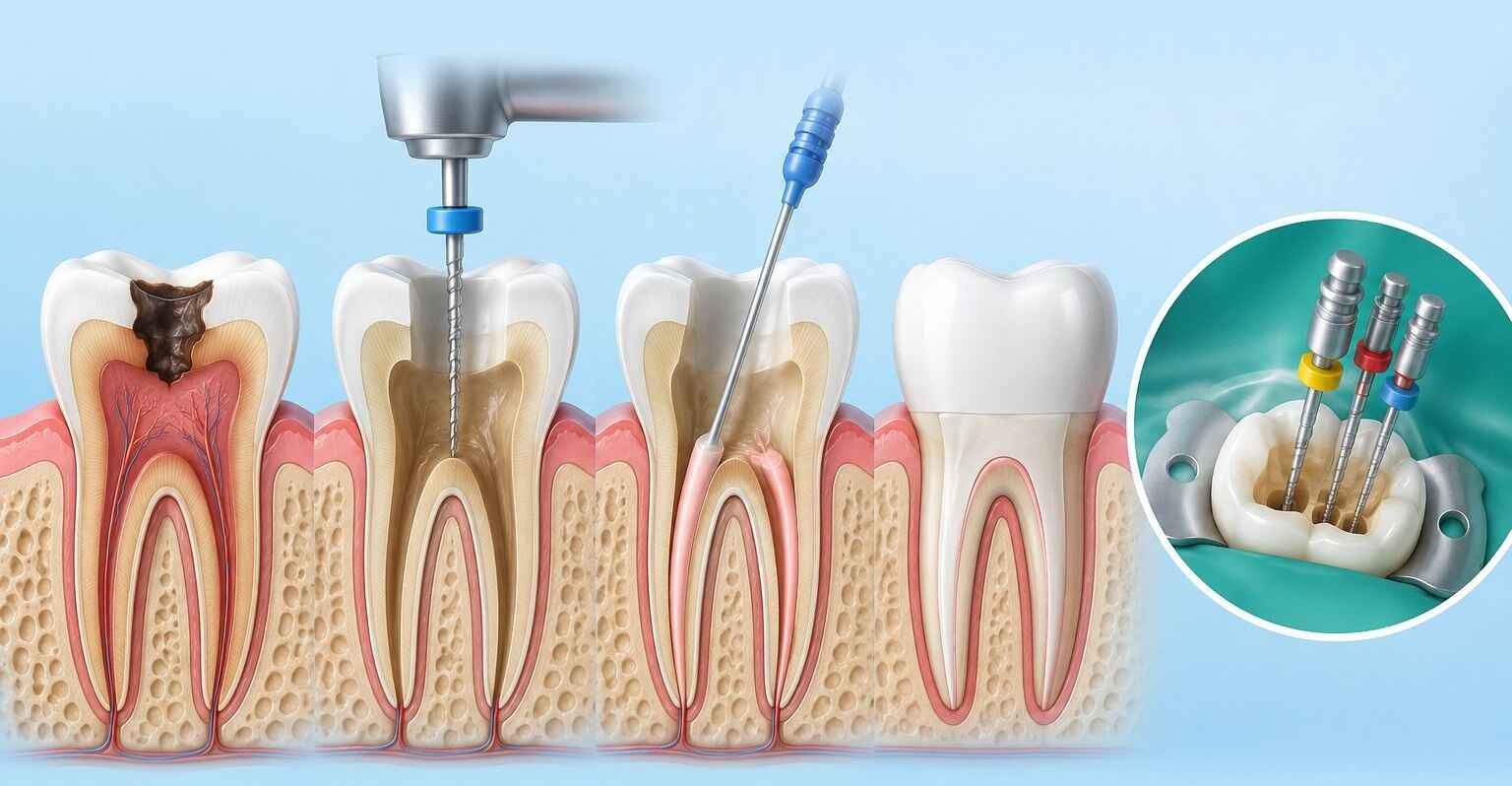
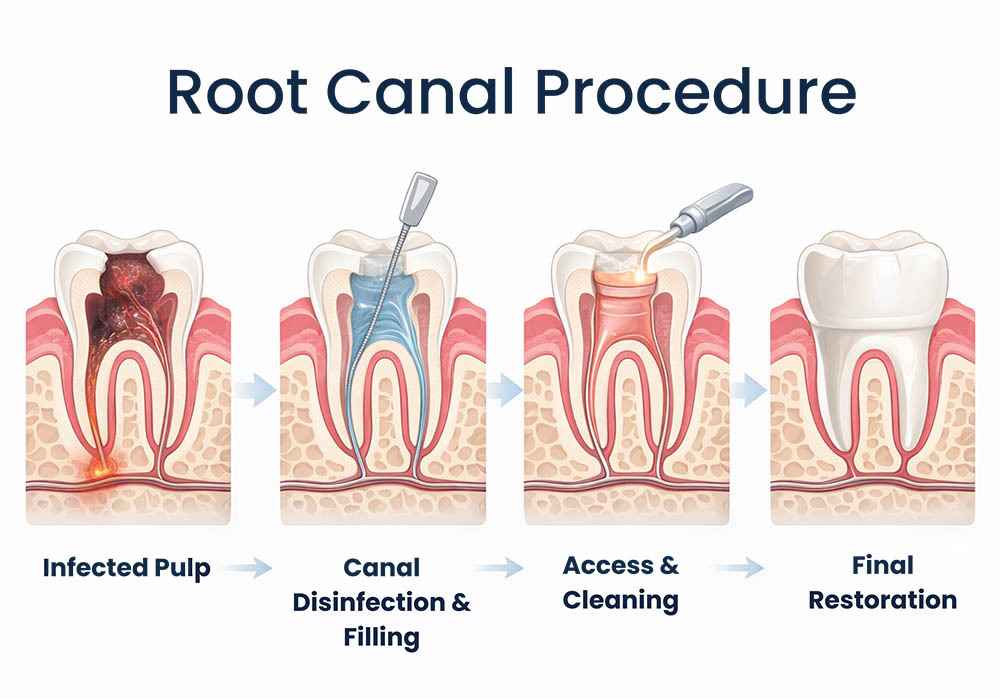
When deep decay, a crack, trauma, or another dental problem allows bacteria to reach the pulp, it can become inflamed or infected. During root canal treatment, the damaged or infected pulp is removed. The internal canals are then cleaned, disinfected, shaped, filled, and sealed to reduce the risk of reinfection and preserve the tooth. developed tooth can continue functioning after the pulp has been removed because it remains supported and nourished by the tissues surrounding its roots. What Is Single Sitting Root Canal Treatment?
A single sitting root canal treatment, or single-visit RCT, is a procedure in which the major stages of root canal treatment are completed during one dental appointment.
These stages generally include:
- Examination and diagnosis
- Administration of local anaesthesia
- Isolation of the affected tooth
- Removal of infected or inflamed pulp
- Cleaning and shaping of the canals
- Disinfection of the root canal system
- Filling and sealing of the canals
- Placement of a temporary or permanent restoration, depending on the case
Research reviews have found that single-visit and multiple-visit root canal treatments can provide comparable clinical effectiveness. The appropriate approach depends on factors such as the condition of the tooth, infection, root anatomy, restorability, symptoms, and the dentist’s clinical assessment. Who May Be Suitable for Single Sitting RCT?
Single-sitting root canal treatment may be considered when:
- The tooth can be adequately cleaned, disinfected, dried, and sealed during one appointment.
- The root canal anatomy can be managed predictably.
- There is sufficient tooth structure to restore and protect the tooth.
- The patient can comfortably complete the required treatment in one visit.
- There are no clinical findings requiring medication or observation between appointments.
- The affected tooth is considered restorable after examination.
Suitability cannot be confirmed through symptoms alone. A clinical examination and dental X-ray are normally required before treatment planning.
When Might Multiple Visits Be Recommended?
Although many root canal treatments can be completed in one sitting, multiple appointments may be safer or more appropriate in certain cases.
These may include:
- Complex or unusually curved root canal anatomy
- Persistent drainage from the tooth
- Extensive infection or swelling
- Previously treated teeth requiring root canal retreatment
- Calcified or blocked canals
- Difficult-to-locate canals
- Teeth with cracks or structural complications
- Cases requiring medication inside the canals
- Patients unable to tolerate a longer appointment
- Situations where the dentist needs to monitor healing or symptoms
At Virender Dental Care, the objective is not simply to complete treatment quickly. The priority is to select an approach that offers appropriate infection control, tooth preservation, comfort, and long-term function.
Common Causes of Root Canal Infection
The pulp inside a tooth may become inflamed, damaged, or infected because of several conditions.
Deep Tooth Decay
Untreated dental decay can progress through the enamel and dentin until bacteria reach the dental pulp. Once the pulp is severely inflamed or infected, a routine filling may no longer be sufficient.
Cracked or Fractured Tooth
A crack can provide a pathway for bacteria to enter the deeper layers of the tooth. Some cracks are clearly visible, while others may be difficult to identify without a detailed examination.
Dental Trauma
An accident, sports injury, fall, or blow to the mouth can damage the dental pulp. Pulp injury can occur even when the tooth does not appear visibly broken. epeated Dental Procedures
Multiple procedures on the same tooth can irritate or damage the pulp over time.
Damaged or Leaking Restoration
A loose, fractured, or leaking filling or crown may allow bacteria to enter the tooth.
Severe Tooth Wear
Excessive grinding, clenching, or erosion may gradually weaken the tooth and expose its deeper tissues.
Advanced Gum or Supporting-Tissue Problems
In selected cases, infection affecting tissues around the tooth may be associated with pulpal and root involvement. A complete examination is needed to identify the origin of the problem.
Signs You May Need Root Canal Treatment
You may require an endodontic evaluation if you experience:
- Severe or throbbing tooth pain
- Pain while biting or chewing
- Sensitivity to hot or cold that continues after the stimulus is removed
- Swelling of the gum, jaw, or face
- A pimple-like swelling on the gum
- Pus or an unpleasant taste in the mouth
- Darkening or discolouration of a tooth
- Tenderness around a particular tooth
- A cracked or badly broken tooth
- Recurrent pain in a previously filled tooth
- Loosening of the affected tooth
- Pain that disturbs sleep
Some infected or damaged teeth may require root canal treatment even when there is little or no pain. Therefore, the absence of pain does not always mean that the tooth is healthy. How Is the Need for a Root Canal Diagnosed?
Before recommending treatment, the dentist may perform:
- A review of your symptoms
- Evaluation of your dental and medical history
- Examination of the tooth and surrounding gums
- Tests for sensitivity to temperature
- Tapping or biting-pressure tests
- Pulp vitality tests
- Dental X-rays
- Assessment of the tooth’s remaining structure
- Evaluation of any swelling, abscess, crack, or previous restoration
The dentist will also determine whether the tooth can be predictably restored after root canal treatment. A severely fractured or non-restorable tooth may require a different treatment plan.
Single Sitting Root Canal Treatment Procedure
Step 1: Consultation and Examination
The affected tooth, gums, bite, and surrounding structures are examined. Dental X-rays may be taken to assess the roots, canals, infection, bone, and restorability of the tooth.
Step 2: Local Anaesthesia
Local anaesthesia is administered to numb the tooth and surrounding area. Modern root canal treatment is generally performed with the area adequately anaesthetised, and most patients remain comfortable during the procedure.
Step 3: Tooth Isolation
The tooth is isolated from saliva to create a clean operating field and protect the patient during treatment.
Step 4: Access Opening
A small opening is made in the tooth to reach the inflamed, damaged, or infected pulp tissue.
Step 5: Removal of Infected Tissue
The pulp tissue is removed from the pulp chamber and root canals.
Step 6: Cleaning and Shaping
The canals are carefully cleaned and shaped using endodontic instruments. This creates space for effective disinfection and sealing.
Step 7: Disinfection
The root canal system is irrigated and disinfected to reduce bacteria and remove tissue remnants and debris.
Step 8: Root Canal Filling
After cleaning and drying, the canals are filled and sealed with an endodontic filling material. Gutta-percha is commonly used to fill the prepared root canal space. 9: Tooth Restoration
The access opening is sealed with a filling. Depending on the location, remaining tooth structure, bite forces, and fracture risk, the dentist may advise a crown or another permanent restoration.
A root-canal-treated tooth should be restored appropriately because the final restoration helps seal, protect, and return the tooth to normal function. Benefits of Single Sitting Root Canal Treatment
When clinically appropriate, single-sitting RCT may provide several advantages.
Fewer Dental Visits
The major stages of the root canal procedure are completed in one appointment, reducing the need for repeated visits.
Faster Completion of Treatment
Patients may complete the endodontic phase of their treatment without waiting between multiple appointments.
Convenience for Busy Patients
It may be useful for patients with demanding work schedules, students, travellers, and people who live far from the clinic.
No Temporary Canal Dressing Between Visits
Because the canals are filled during the same appointment, there is no interval between canal preparation and final sealing.
Tooth Preservation
The central purpose of root canal treatment is to control infection and preserve the natural tooth instead of removing it whenever the tooth is restorable. oration of Chewing Function
After appropriate restoration, the treated tooth can continue to support biting and chewing.
Relief from Infection-Related Pain
Root canal treatment addresses diseased pulp tissue that may be responsible for severe toothache and tenderness.
Is Single Sitting Root Canal Treatment Painful?
The procedure is carried out after administering local anaesthesia. You may feel pressure or movement, but the treatment area should be numb.
The pain commonly associated with a “root canal” usually comes from the inflamed or infected tooth before treatment rather than from the procedure itself. With modern anaesthesia and endodontic techniques, most patients remain comfortable during treatment. derness or sensitivity may occur for a few days afterward, particularly if the tooth was painful or infected before treatment. the clinic if pain is severe, continues to increase, or is accompanied by swelling, fever, discharge, or difficulty opening the mouth.
Why Choose Virender Dental Care for Root Canal Treatment?
- Treatment by an Endodontist: Root canal care is provided under Dr. Mohit Jakhar, Endodontist and Implantologist, BDS, MDS, with postgraduate training in diagnosing and treating conditions affecting the dental pulp and root canal system.
- Individualised Treatment Planning: Every tooth is evaluated before deciding whether it should be treated in one sitting or multiple visits.
- Focus on Saving Natural Teeth: Whenever clinically appropriate, the objective is to treat infection while preserving the natural tooth.
- Clear Patient Communication: The diagnosis, procedure, restoration requirements, expected aftercare, alternatives, and treatment costs are explained before treatment.
- Convenient Location in Hisar: Virender Dental Care is conveniently located opposite the Fire Station in HTM Colony, near Azad Nagar, Hisar.
FAQ About Root Canal Treatment
No. Many teeth may be suitable for single-sitting root canal treatment, but some require multiple appointments because of persistent infection, drainage, complex anatomy, retreatment requirements, swelling, or other clinical factors.
Appointment length varies depending on the tooth, number of canals, infection, anatomy, previous dental work, and complexity of the procedure. A molar with several canals may require more time than a front tooth. The dentist can provide a better estimate after examination and X-rays.
The severe pain caused by inflamed pulp may improve significantly after treatment. However, the tissues around the root can remain tender for a few days. Contact the clinic if pain becomes severe, increases, or is accompanied by swelling or fever.
Many back teeth require a crown or protective restoration after root canal treatment. The recommendation depends on the position of the tooth, remaining tooth structure, bite, and fracture risk.
It may be possible, but the treatment plan depends on the extent and nature of the swelling, drainage, systemic symptoms, and the patient’s medical condition. Some cases may require staged treatment or additional management.
Single-visit root canal treatment is an accepted approach when used in suitable cases. Evidence reviews suggest that single-visit and multiple-visit treatments can have comparable effectiveness. Case selection and proper cleaning, disinfection, sealing, and restoration remain important.
Local anaesthesia is used to numb the tooth and surrounding area. Most patients remain comfortable during the procedure. Mild tenderness afterward can occur and normally improves with time.
Not every patient requires antibiotics. Root canal treatment directly addresses the source of infection inside the tooth. Antibiotics may be prescribed when the dentist identifies spreading infection, systemic symptoms, or another clinical indication.
A properly treated and restored tooth may remain functional for many years. Its lifespan depends on the quality of treatment, final restoration, oral hygiene, bite forces, gum and bone support, and regular dental care. Some treated teeth can last a lifetime with appropriate care.
Many patients return to their normal routine after treatment. However, numbness, mild soreness, or the length of the appointment may make it preferable to avoid demanding activities for the remainder of the day.
Book a Root Canal Consultation in Hisar
Do not wait for tooth pain or swelling to become severe. Early diagnosis may improve the possibility of preserving your natural tooth.
Visit Virender Dental Care for an examination and personalised treatment plan.
Virender Dental Care
Opposite Fire Station, HTM Colony
Azad Nagar, Hisar, Gangwa
Haryana 125001
Dr. Mohit Jakhar
Endodontist and Implantologist
BDS, MDS
Call: +91 72064 25552
WhatsApp: +91 72064 25552