
Dental Fillings in Hisar
Tooth decay, small fractures and worn areas can weaken a tooth and cause sensitivity or pain. When treated early, the damaged portion of the tooth can often be removed and restored with a dental filling.
At Virender Dental Care, we provide customised dental fillings in Hisar to restore the shape, strength and function of damaged teeth. Tooth-coloured filling materials may also help the restoration blend naturally with your surrounding teeth.
Your treatment is planned by Dr. Mohit Jakhar – Endodontist & Implantologist (BDS, MDS) after examining the tooth, surrounding gums and bite.
Early treatment can help prevent a small cavity from developing into a deeper infection that may require root canal treatment or extraction.
What Is a Dental Filling?
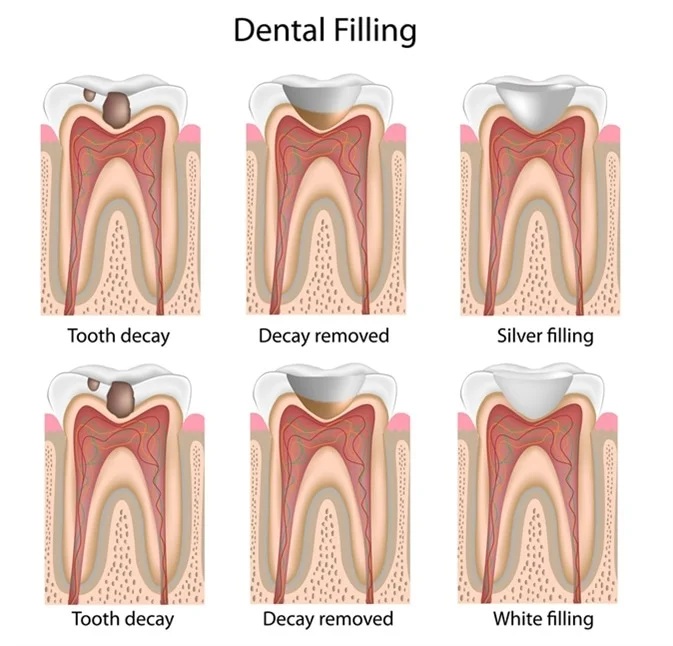
A dental filling is a restorative treatment used to repair a tooth affected by decay, minor fracture, wear or structural damage.
During the procedure, the damaged or decayed portion of the tooth is carefully removed. The resulting space is cleaned and filled with a suitable restorative material.
The filling helps:
- Restore the natural shape of the tooth
- Improve chewing function
- Protect the exposed tooth structure
- Reduce food trapping
- Prevent further damage
- Improve the appearance of the tooth
- Reduce sensitivity caused by selected defects
The most appropriate filling material depends on the location of the tooth, size of the cavity, bite forces, appearance requirements and amount of healthy tooth structure remaining.
When is a Dental Filling Needed?
A dental filling may be recommended for:
- Tooth decay or cavities
- Small chipped teeth
- Minor tooth fractures
- Worn tooth surfaces
- Food-trapping areas
- Small gaps caused by tooth damage
- Replacement of an old or damaged filling
- Minor cosmetic reshaping
- Non-cavity defects near the gumline
- Teeth affected by erosion or abrasion
A clinical examination is necessary because not every damaged tooth can be restored with a routine filling.
Deep decay, major fractures or severe structural loss may require a dental crown, root canal treatment or another restorative procedure.
Signs You May Have a Cavity
Dental decay does not always cause pain during its early stages. Regular dental examinations can help identify cavities before they become larger.
Possible signs include:
- Sensitivity to hot, cold or sweet foods
- Pain while biting or chewing
- A visible hole in the tooth
- Dark, brown or white spots
- Food repeatedly getting stuck
- Rough or broken tooth surfaces
- Toothache
- Floss tearing between certain teeth
- Bad taste around a tooth
- An old filling that feels loose or damaged
Persistent tooth pain or swelling may indicate that the decay has reached deeper tissues and should be assessed promptly.
Types of Dental Fillings
Tooth-Coloured Composite Fillings
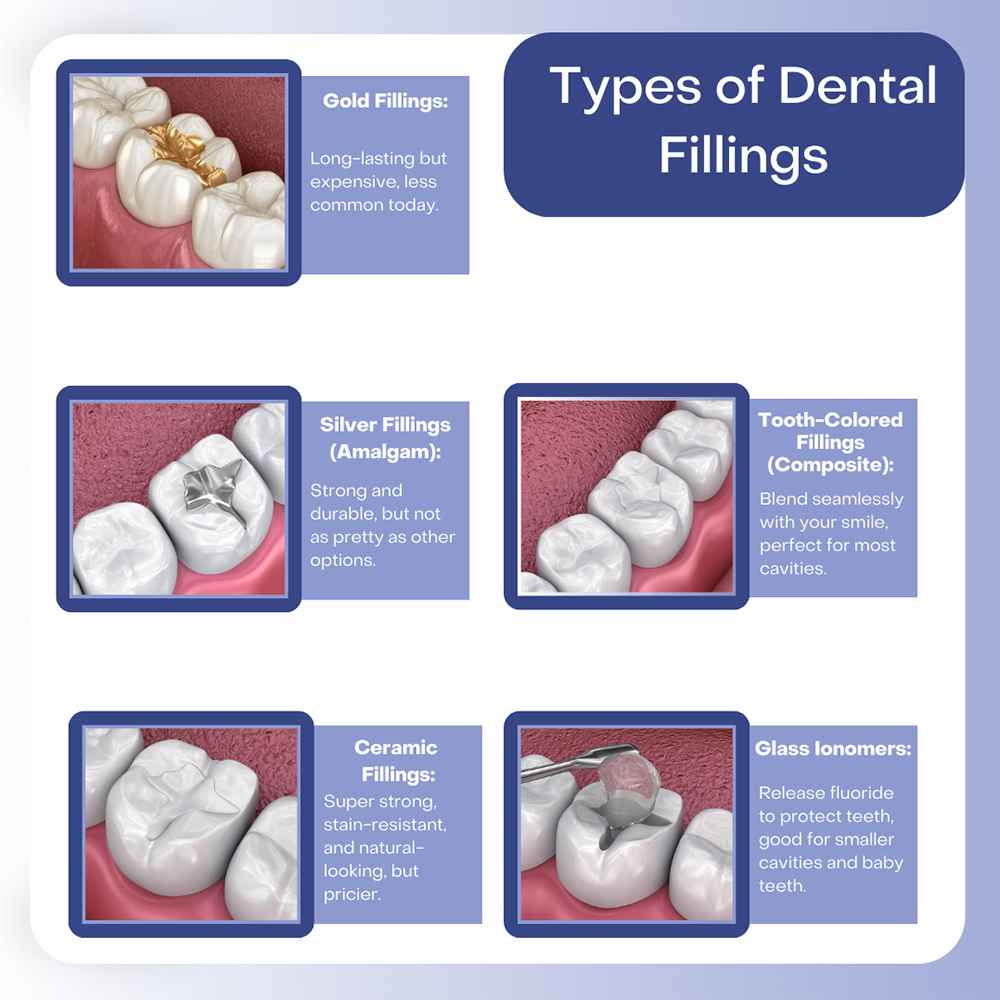
Composite fillings are made from a resin-based, tooth-coloured material. They can be matched to the shade of the surrounding teeth and are commonly used for both front and back teeth.
Composite fillings may be suitable for:
- Small to moderate cavities
- Chipped teeth
- Visible front teeth
- Replacement of selected old fillings
- Minor cosmetic corrections
- Worn tooth edges
The material is bonded to the tooth and shaped to restore its appearance and function.
Glass Ionomer Fillings
Glass ionomer materials may be used in selected areas, particularly where moisture control is difficult or the restoration is close to the gumline.
They may also be considered for:
- Small cavities
- Root-surface decay
- Temporary or intermediate restorations
- Selected cavities in children
- Areas exposed to lower chewing pressure
Your dentist will determine whether this material is appropriate for the affected tooth.
Metal Fillings
Metal-based restorations have traditionally been used in areas exposed to strong chewing forces.
The suitability of any metal filling depends on the condition of the tooth, appearance requirements and available treatment alternatives.
Patients with old metal fillings do not automatically need replacement. Replacement may be recommended when the restoration is fractured, leaking, associated with decay or no longer functioning correctly.
Temporary Fillings
A temporary filling may be placed when:
- Treatment must be completed in stages
- The tooth requires observation
- Root canal treatment is in progress
- Emergency pain relief is being provided
- A permanent restoration cannot be completed immediately
Temporary fillings are not designed to function permanently and should be replaced or reviewed as advised.
Tooth-Coloured Fillings
Tooth-coloured fillings are designed to resemble the natural shade of the teeth.
They are particularly useful for visible areas because they can be shaped and polished to blend with the surrounding enamel.
Benefits may include:
- Natural-looking appearance
- Conservative tooth preparation in selected cases
- Direct bonding to the tooth
- Restoration of small chips and cavities
- Suitability for front and back teeth
- Ability to repair selected damaged areas
The final appearance depends on the size and location of the restoration, the condition of the tooth and the filling material selected.
Our Dental Filling Procedure
- Dental Examination: Your dentist will examine the tooth and surrounding tissues. Dental X-rays may be advised to determine the depth and extent of decay.
- Local Anaesthesia: Local anaesthesia may be used to numb the treatment area, particularly when the cavity is deep or the tooth is sensitive.
- Removal of Decay: The decayed or damaged tooth structure is carefully removed while preserving as much healthy tooth as possible.
- Cleaning the Tooth: The prepared area is cleaned to remove debris and create a suitable surface for the restoration.
- Placement of Filling Material: The selected material is placed into the prepared cavity. Tooth-coloured composite is usually applied and hardened in controlled layers.
- Shaping and Polishing: The filling is shaped to restore the tooth’s natural contour. It is then polished to create a smoother surface.
- Bite Adjustment: Your bite is checked to ensure that the restored tooth does not feel unusually high or interfere with chewing.
Why Choose Virender Dental Care for Dental Fillings?
- Personalised Tooth Assessment: Each tooth is examined carefully to determine whether a filling is the most appropriate restoration.
- Natural-Looking Restorations: Tooth-coloured materials may be used to create restorations that blend with the surrounding teeth.
- Conservative Dental Care: The treatment aims to remove damaged tissue while preserving healthy tooth structure wherever possible.
- Careful Bite Adjustment: Every filling is checked and adjusted to support comfortable chewing.
- Comprehensive Treatment Options: If a filling is unsuitable, alternative treatments such as root canal therapy, crowns or other restorations can be discussed.
- Qualified Dental Care: Your consultation and treatment are provided under the guidance of Dr. Mohit Jakhar Endodontist & Implantologist, BDS, MDS
Frequently Asked Questions About Dental Fillings
Tooth-coloured composite fillings are commonly used to restore cavities and damaged teeth. The most suitable material is selected according to the tooth’s condition and location.
The duration depends on the size, depth and location of the cavity. A small filling may require less time than a large or technically complex restoration.
Composite filling material can be selected to closely match the surrounding tooth shade. Exact colour matching may vary according to the tooth and clinical conditions.
Yes. New decay can develop around the edges of a filling if plaque is not adequately controlled. Good oral hygiene and regular check-ups remain necessary.
Some chipped composite fillings can be repaired. Larger fractures or decay may require complete replacement of the restoration.
Children may need fillings when tooth decay affects primary or permanent teeth. Treating cavities in primary teeth can help prevent pain, infection and problems with eating.
Preserving a restorable natural tooth is generally preferred. Extraction may be considered when the tooth is too severely damaged or cannot be treated predictably.
Book a Dental Filling Appointment in Hisar
Do not wait for a small cavity to become a painful dental emergency. Get your tooth examined and restored at Virender Dental Care.
Clinic: Virender Dental Care
Head Dentist: Dr. Mohit Jakhar – Endodontist & Implantologist, BDS, MDS
Address: Opposite Fire Station, HTM Colony, Azad Nagar, Hisar, Haryana – 125001
Schedule your dental examination and personalised treatment consultation today.
The appropriate filling material, treatment process and expected durability depend on the condition of the tooth, cavity size and individual oral-health factors. A clinical examination and dental X-ray may be required before treatment.