Book your appointment online and secure your dental slot easily. Book Now
Root canal treatment, commonly known as RCT, is performed to save a tooth when the pulp inside it becomes infected or inflamed. Traditionally, root canal treatment was often completed over multiple appointments. However, with modern dental techniques and improved instruments, many suitable cases can now be treated in a single visit.
If you are considering single sitting RCT in Hisar, you may wonder whether completing the treatment in one appointment is better than having it done over multiple sittings.
The answer depends on the condition of the tooth, the severity of infection, the complexity of the root canals, and the dentist’s clinical assessment. Both approaches have their own indications and advantages.
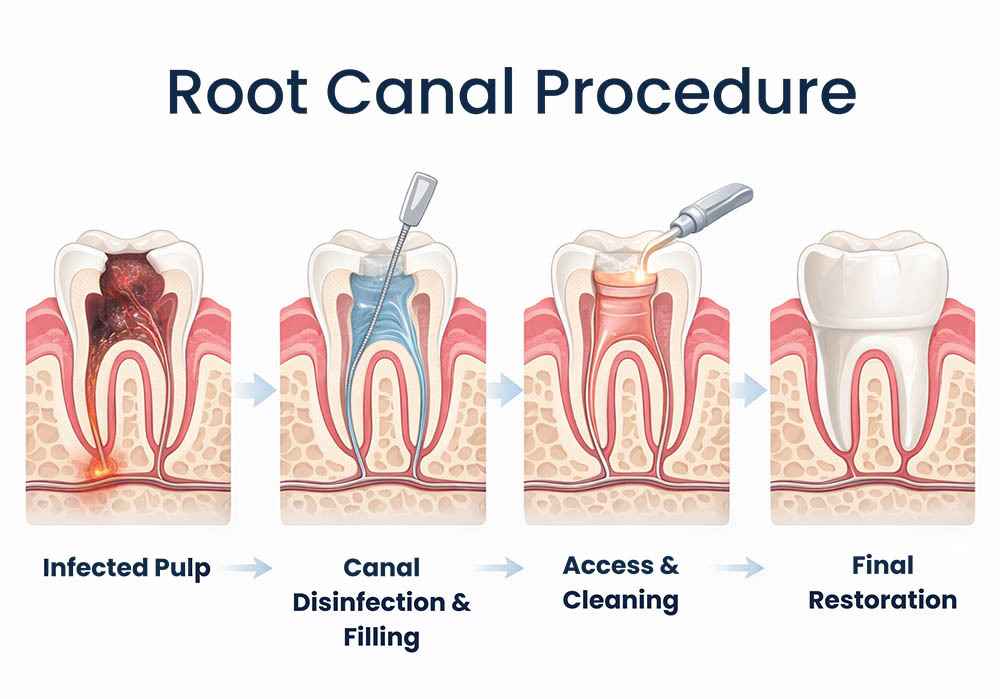
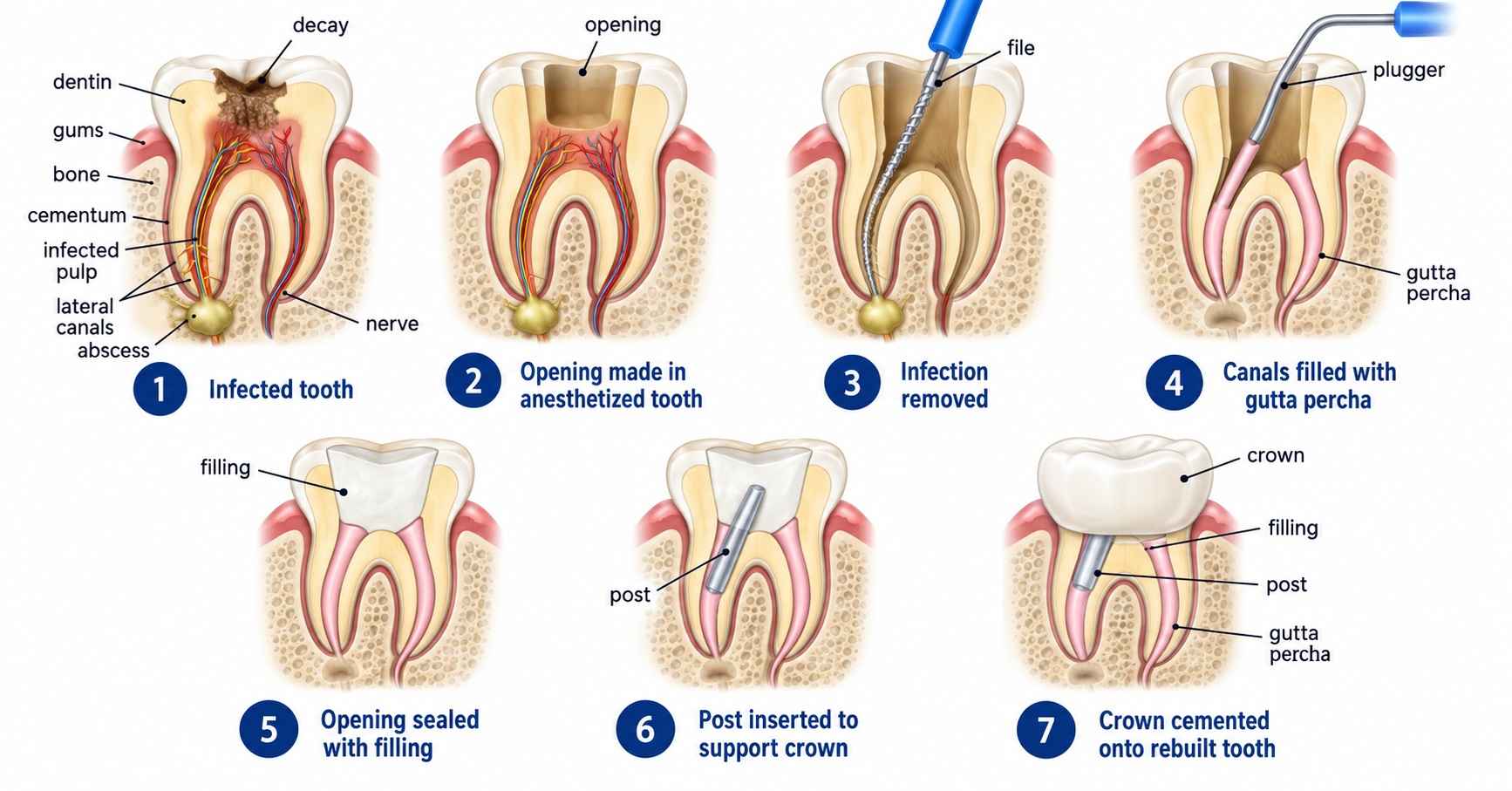
A single sitting root canal treatment is a procedure in which cleaning, shaping, disinfection, and filling of the root canals are completed during one dental appointment. During the procedure, the dentist removes the infected or damaged pulp, cleans and disinfects the canals, and seals them with a suitable root canal filling material. For appropriately selected cases, single sitting RCT in Hisar can provide a convenient treatment option, particularly for patients who prefer fewer dental visits.
In a multiple sitting RCT, the root canal treatment is completed over two or more appointments. During the first visit, the dentist usually removes the infected pulp, cleans the canals, and may place medication inside the tooth. A temporary filling is then used to seal the tooth between appointments.
At a later visit, the canals are assessed, cleaned again if required, and permanently filled once the dentist considers the tooth ready for completion. Multiple visits may be preferred in cases involving persistent infection, drainage, significant inflammation, complicated anatomy, or other clinical factors.
The main difference between the two approaches is the number of appointments required.
Number of Visits: Single sitting RCT is generally completed in one appointment, while multiple sitting treatment requires two or more visits. For patients with busy schedules or those travelling from outside Hisar, reducing the number of dental appointments can be more convenient.
Treatment Time: A single sitting appointment may take longer because the entire root canal procedure is completed in one visit. Multiple sitting RCT divides the procedure across separate appointments, making each individual visit potentially shorter.
Infection Management: Both techniques aim to remove infected tissue and microorganisms from inside the root canals. However, when there is extensive infection, swelling, persistent discharge, or difficulty achieving adequate canal disinfection in one visit, the dentist may recommend completing the RCT over multiple sittings.
Patient Convenience: One of the major advantages of single sitting RCT is convenience. Patients do not need to repeatedly visit the dental clinic for the same stage of treatment. This can be especially useful for people with demanding work schedules or patients travelling long distances.
For suitable cases, single sitting root canal treatment may offer several advantages:
However, the suitability of single sitting RCT should always be determined after a clinical examination and, when required, dental imaging.
A dentist may consider single sitting treatment when the tooth can be thoroughly cleaned, disinfected, dried, and sealed during the same appointment.
It may be suitable for selected cases where:
The decision should be based on the individual tooth rather than simply choosing the fastest treatment option.
Multiple sitting root canal treatment may be recommended when the dentist needs additional time to control infection or monitor the response of the tooth.
It may be preferred in cases involving:
Medication may be placed inside the canals between appointments to assist with infection control when clinically indicated.
Root canal treatment is generally performed under local anaesthesia, which helps minimize discomfort during the procedure. Some patients may experience mild tenderness or sensitivity after RCT, regardless of whether it is completed in one or multiple sittings. This usually varies depending on the condition of the tooth and the extent of inflammation before treatment. If pain becomes severe, swelling develops, or symptoms persist, patients should contact their dentist for evaluation.
Many root canal-treated teeth, particularly back teeth, may require a dental crown or another appropriate restoration to protect the remaining tooth structure. A tooth that has undergone RCT may already have been weakened by decay, fracture, or previous fillings. Restoring the tooth properly helps improve its function and reduces the risk of further damage. Your dentist will assess how much healthy tooth structure remains and recommend the most suitable restoration.
There is no single answer that applies to every patient.
Single sitting RCT is not automatically better simply because it is faster, and multiple sitting RCT is not automatically better because it involves more appointments. The best approach is the one that allows the dentist to adequately clean, disinfect, shape, and seal the root canals while considering the condition of the individual tooth. A proper diagnosis is therefore essential before deciding between single sitting and multiple sitting root canal treatment.
If you are experiencing persistent tooth pain, sensitivity, swelling, or discomfort while chewing, a dental examination can help determine whether you need root canal treatment. At Virender Dental Care, Hisar, patients can consult the dental team regarding root canal treatment and determine whether a single sitting RCT in Hisar or a multiple sitting approach is more suitable for their particular dental condition.
Early diagnosis can often help preserve a natural tooth and prevent the dental problem from becoming more complicated. Both single sitting and multiple sitting RCT are established approaches to root canal treatment. The right choice depends on factors such as infection, tooth anatomy, symptoms, and the dentist’s assessment. For suitable cases, single sitting RCT in Hisar can offer the advantage of completing treatment in fewer visits. In other situations, multiple sittings may provide the dentist with additional time to manage infection before permanently sealing the tooth. Rather than choosing treatment only on the basis of speed, consult a qualified dentist and select the approach that is appropriate for your tooth and overall oral health.