Book your appointment online and secure your dental slot easily. Book Now
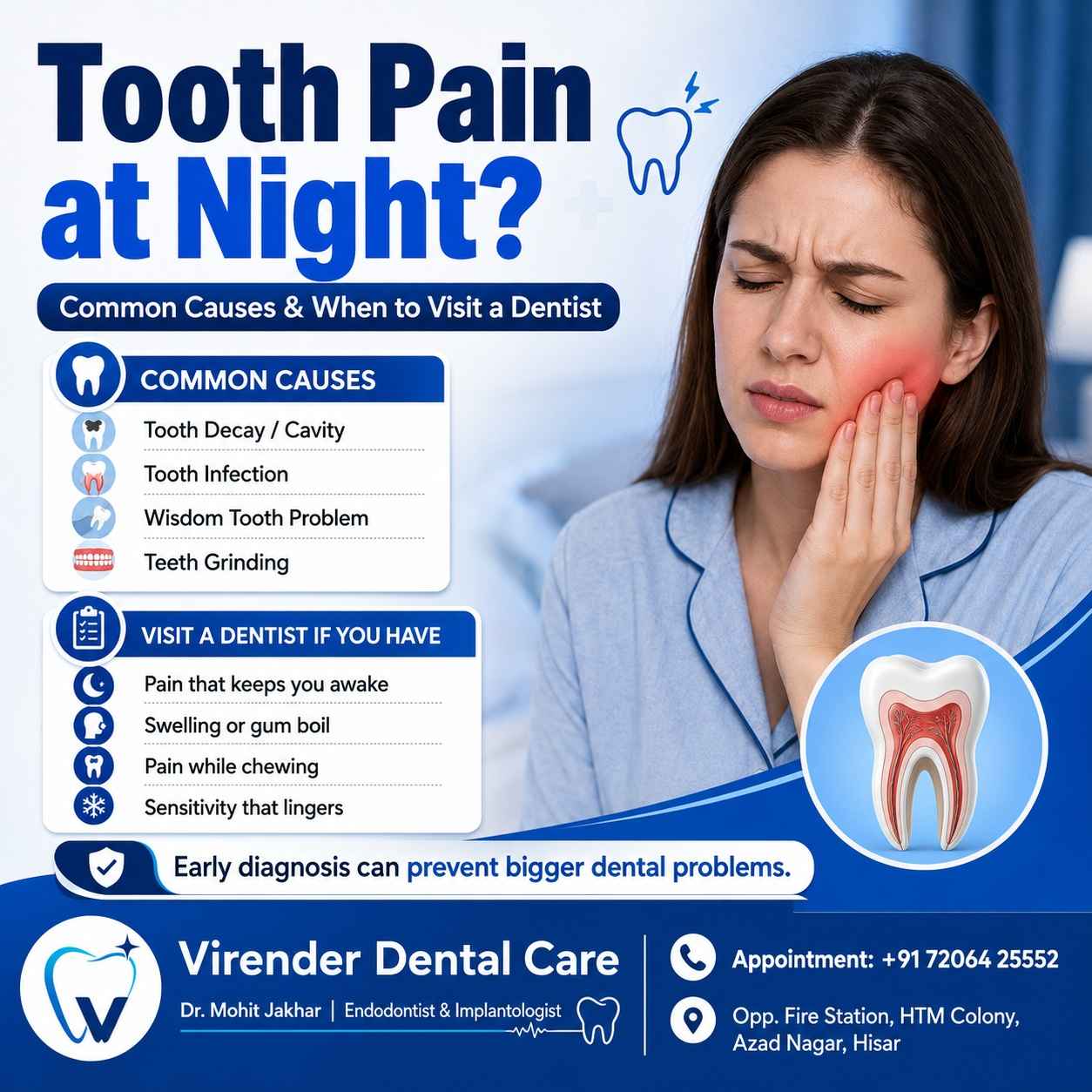
Tooth pain at night can make it difficult to sleep, concentrate or complete everyday activities. It may feel like a dull ache, sharp sensitivity, pressure, throbbing pain or discomfort while biting.
Although painkillers may provide temporary relief, recurring or severe toothache usually indicates an underlying dental problem that needs professional attention. Common causes include tooth decay, infection, a cracked tooth, a damaged filling, gum disease, wisdom-tooth problems and teeth grinding.
At Virender Dental Care in Hisar, Dr. Mohit Jakhar evaluates the source of dental pain and recommends treatment based on the condition of the tooth, gums and surrounding tissues.
Some dental pain becomes more noticeable after you lie down. Severe tooth or mouth pain may feel worse when lying flat, and temporarily keeping the head elevated can sometimes reduce the discomfort.
Pain can also appear worse at night because:
Night-time pain does not identify the exact problem by itself. A dental examination is required to determine whether the pain is coming from the tooth, gums, jaw muscles or another nearby structure.
Tooth decay begins when bacteria in the mouth produce acids that damage the enamel. Early decay may not cause noticeable symptoms, but as it becomes deeper, it can lead to sensitivity, toothache and infection.
Possible symptoms include:
A small cavity may be restored with a dental filling. Deeper decay affecting the dental pulp may require root canal treatment.
The centre of each tooth contains dental pulp, which includes nerves and blood vessels. Deep decay, repeated dental procedures, trauma, cracks or damaged restorations can cause this tissue to become inflamed or infected.
Signs that the pulp may be involved include:
Lingering pain after temperature changes can indicate significant pulp damage and should be assessed promptly.
Depending on the diagnosis, root canal treatment may be recommended to remove the inflamed or infected pulp and preserve the natural tooth.
A dental abscess is a collection of pus caused by infection around a tooth or its root. It may produce severe pressure, swelling, tenderness or pain while chewing.
Possible warning signs include:
An abscess may develop when infected pulp is left untreated. Treatment may involve root canal therapy, drainage, extraction or another procedure depending on whether the tooth can be saved.
Antibiotics alone do not always eliminate the source of a tooth infection. The tooth may still require direct dental treatment, and antibiotics should only be taken when prescribed for your specific condition.
A tooth can crack due to trauma, biting hard objects, a large filling or repeated grinding and clenching.
Cracks may cause:
Sharp pain while chewing may be associated with decay, a loose filling, a crack or damage to the pulp inside the tooth.
Treatment depends on the depth and location of the crack. Options may include bonding, a dental crown, root canal treatment or extraction when the tooth cannot be restored.
A filling can become worn, cracked or loose over time. This may allow food and bacteria to enter around the restoration and expose sensitive tooth structure.
You may notice:
The restoration and underlying tooth must be examined to determine whether the filling can be repaired or needs replacement.
Bruxism refers to grinding, clenching or thrusting the jaw, often without the person realising it. It may happen while awake or during sleep.
Night-time bruxism can contribute to tooth sensitivity, enamel cracks, damaged restorations, headaches, jaw pain and disrupted sleep.
Possible signs include:
A dentist can examine the teeth and jaw muscles for signs of bruxism. Treatment may include addressing contributing factors and providing a custom appliance when clinically suitable.
Gum disease affects the tissues that support the teeth. It may begin with red, swollen or bleeding gums and progress to bone loss, tooth mobility and pain while chewing.
Signs may include:
Treatment may involve professional scaling, deep cleaning and ongoing periodontal maintenance, depending on the severity of the condition.
A wisdom tooth may cause pain when it does not have enough space to erupt properly. A partially erupted tooth can trap food and bacteria beneath the surrounding gum tissue.
Possible symptoms include:
Wisdom-tooth pain should be evaluated with a dental examination and appropriate imaging. Not every wisdom tooth needs removal, but extraction may be advised when recurrent infection, decay or damage is present. Wisdom-tooth eruption problems are recognised causes of toothache.
Sensitive teeth may cause brief, sharp pain after exposure to:
Sensitivity can be associated with minor decay, exposed tooth roots, gum recession, worn enamel or a loose filling. Sensitivity that persists or lingers should be examined because it may indicate deeper damage.
Pain that feels like toothache does not always originate from a tooth. Jaw-joint disorders can cause pain in the chewing muscles, jaw stiffness, facial discomfort and changes in jaw movement.
A dull ache in the upper teeth and jaw may also be associated with tooth grinding or sinus-related pain.
Less commonly, nerve conditions such as trigeminal neuralgia can produce sudden, shock-like facial pain that may be mistaken for toothache. When a dentist cannot identify a dental cause, further medical or specialist assessment may be appropriate.
| Type of pain | Possible dental cause |
|---|---|
| Brief sensitivity to cold or sweet foods | Minor decay, gum recession or exposed root |
| Lingering hot or cold sensitivity | Significant pulp inflammation or damage |
| Sharp pain while biting | Crack, decay, loose filling or pulp damage |
| Constant throbbing pain | Deep decay, pulp infection or abscess |
| Morning tooth and jaw pain | Night-time grinding or clenching |
| Pain with swollen gums | Gum infection or dental abscess |
| Pain behind the last molar | Impacted or infected wisdom tooth |
| Electric shock-like facial pain | Possible nerve-related pain requiring evaluation |
These patterns can help guide diagnosis, but symptoms alone cannot confirm the cause.
Arrange a dental consultation promptly when:
Dental pain that interferes with sleep or daily activities, persists despite pain relief or does not go away should be treated as an urgent dental problem.
Seek immediate emergency medical attention when tooth or mouth pain is accompanied by:
These symptoms may indicate a spreading infection or serious injury and should not wait for a routine dental appointment.
Temporary self-care may reduce discomfort, but it will not treat the underlying cause.
While waiting to see a dentist:
Do not take antibiotics left over from another illness or prescribed for another person. Antibiotic choice and necessity depend on the diagnosis, medical history and whether an infection has spread.
Your dental appointment may include:
Your dentist may ask:
The teeth, gums, bite, fillings and surrounding tissues will be examined for decay, cracks, swelling, gum disease and other abnormalities.
Selected teeth may be tested for sensitivity, pressure or tenderness to help locate the source of pain.
X-rays may help identify hidden decay, bone changes, infection, impacted teeth or problems around the roots.
After diagnosis, the dentist will explain the available treatment options.
Treatment depends entirely on the cause and may include:
Night-time pain does not automatically mean that root canal treatment is required. A filling may be sufficient for a smaller cavity, while an infected or severely inflamed pulp may require root canal therapy.
Tooth pain may temporarily reduce, but this does not necessarily mean that the dental problem has healed.
For example, pain from an infected tooth may change or reduce if the pulp tissue loses vitality, while infection can remain around the root. Untreated tooth decay can continue progressing and may eventually lead to infection or tooth loss.
Recurring pain should therefore be examined even when it temporarily improves.
You can lower your risk of decay and gum disease by:
Good oral hygiene and regular dental check-ups can help identify problems before they develop into severe pain.
Pain may become more noticeable when you are resting, and some severe dental pain can feel worse when lying flat. Night-time grinding may also contribute to tooth or jaw discomfort. A dental examination is needed to identify the exact cause.
Throbbing pain may be associated with significant inflammation or infection, particularly when accompanied by swelling, tenderness, fever or a bad taste. However, diagnosis requires an examination and sometimes an X-ray.
Not always. Treatment depends on whether the problem involves minor decay, a damaged filling, a crack, gum disease or inflammation inside the tooth. Root canal treatment is generally considered when the pulp is irreversibly inflamed or infected.
Pain medication may temporarily reduce discomfort, but it does not remove decay, repair a crack or eliminate the source of most dental infections.
Antibiotics are not required for every toothache. Many dental conditions require direct treatment of the affected tooth. Antibiotics should only be taken when prescribed after an appropriate assessment.
Yes. A partially erupted or impacted wisdom tooth can cause inflammation, food trapping and infection around the surrounding gum.
Seek urgent care when pain affects sleep, does not improve, is accompanied by swelling or fever, or makes biting difficult. Seek emergency medical care when swelling affects breathing, swallowing, speaking or the area around the eye.
Do not allow recurring night-time tooth pain to develop into a more complicated dental problem. Visit Virender Dental Care for a detailed examination, diagnosis and personalised treatment plan.
Dr. Mohit Jakhar
Endodontist and Implantologist (BDS, MDS)
Virender Dental Care
Opposite Fire Station
HTM Colony, Azad Nagar
Hisar, Haryana – 125001
Appointment: +91 72064 25552