Book your appointment online and secure your dental slot easily. Book Now
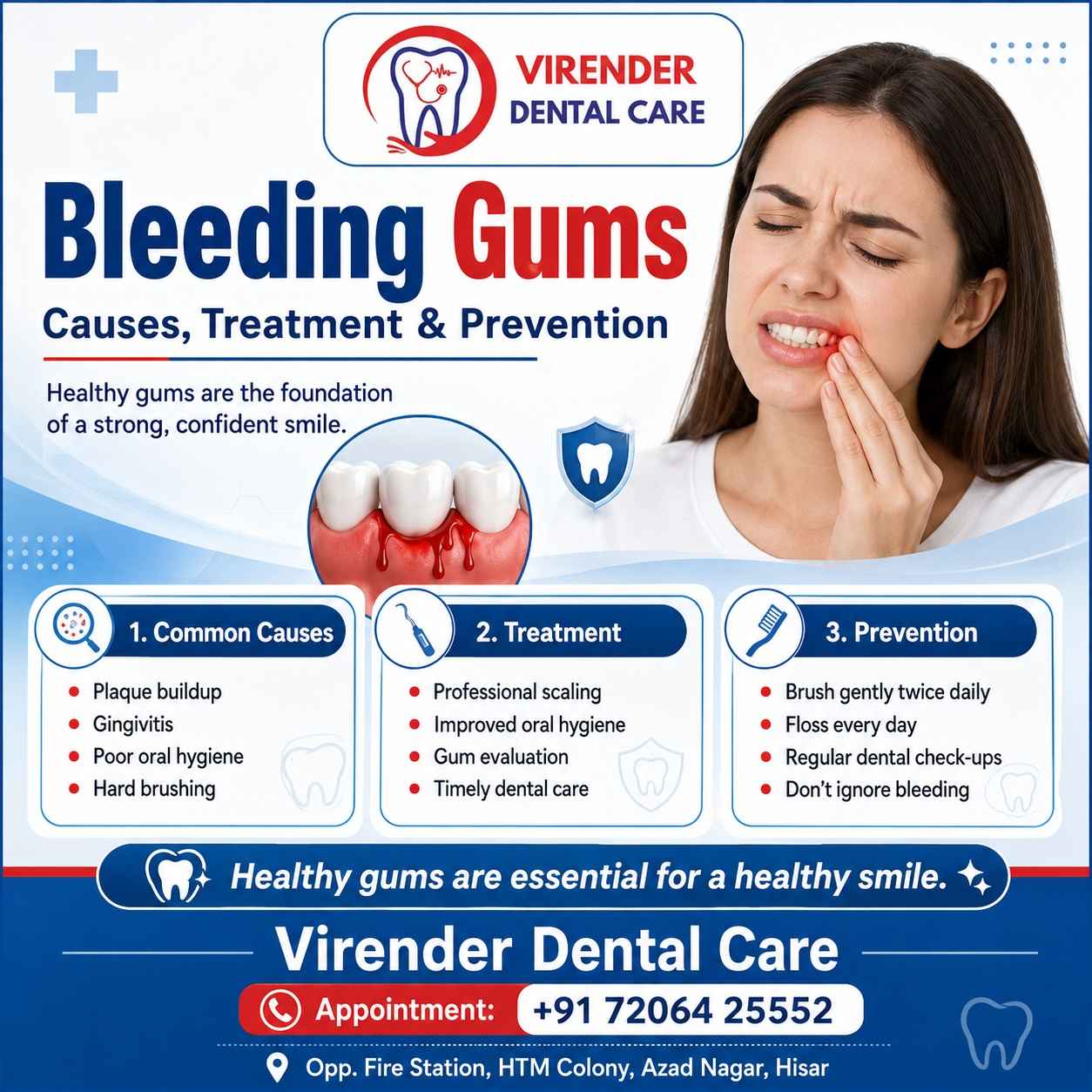
Noticing blood while brushing, flossing or eating can be concerning. Although occasional bleeding may occur after brushing too forcefully or beginning a new flossing routine, gums that bleed regularly may be an early sign of gingivitis or another oral-health problem.
Gum disease commonly causes gums to become red, swollen, sore and prone to bleeding. Early-stage gum disease, known as gingivitis, can often be reversed with improved daily oral hygiene and professional dental cleaning. When left untreated, it may progress to periodontitis, which can damage the tissues and bone supporting the teeth.
At Virender Dental Care in Hisar, bleeding gums are evaluated through a detailed examination of the teeth, gumline and supporting tissues. Treatment is then planned according to the cause and severity of the condition.
Healthy gums should not bleed regularly during gentle brushing or cleaning between the teeth.
Bleeding after using excessive pressure may result from temporary gum injury. Gums can also bleed briefly when someone starts flossing after not cleaning between their teeth regularly. However, frequent or spontaneous bleeding should not be ignored because it may indicate inflammation, plaque buildup, gum disease or another health-related concern.
Schedule a dental examination when your gums:
Dental plaque is a sticky layer of bacteria that continually develops on the teeth. When plaque is not adequately removed through brushing and interdental cleaning, it can collect along the gumline and irritate the surrounding tissues.
Inflamed gums may become red, swollen and prone to bleeding. Plaque that remains for too long can harden into tartar or dental calculus, which cannot be removed with routine brushing and requires professional dental cleaning.
Signs of plaque-related gum inflammation may include:
Gingivitis is the earliest and mildest form of gum disease. It develops when plaque buildup causes inflammation of the gums.
Common symptoms include:
Gingivitis does not usually involve loss of the supporting bone and is considered reversible when detected early. Professional cleaning, effective brushing and daily interdental cleaning can help return the gums to a healthier condition.
Because gingivitis may not cause significant pain, some patients do not realise that they have gum disease until bleeding becomes frequent.
When gingivitis is not controlled, inflammation can extend deeper around the teeth and develop into periodontitis.
Periodontitis damages the gum attachment and supporting bone. Spaces known as periodontal pockets may form between the teeth and gums, allowing bacteria and tartar to collect below the gumline. Unlike gingivitis, bone loss from periodontitis cannot simply be reversed, but professional treatment can help slow and manage the condition.
Possible signs include:
Advanced gum disease can eventually contribute to tooth loss if it is not treated and maintained properly.
Using excessive pressure or a hard-bristled toothbrush can injure the gum tissue and cause bleeding.
Brushing harder does not necessarily clean the teeth more effectively. A soft-bristled toothbrush should be used with gentle, controlled movements. The bristles should be angled towards the gumline without aggressive back-and-forth scrubbing.
If bleeding continues even after improving your brushing technique, arrange a dental examination to rule out gum inflammation or another cause.
Gums may bleed temporarily when you begin flossing after not cleaning between your teeth regularly. According to the American Dental Association’s patient guidance, this initial bleeding may settle within approximately one week.
Do not force the floss into the gums. Gently guide it between the teeth, curve it around the side of each tooth and move it carefully beneath the gumline.
Persistent bleeding beyond the initial adjustment period may indicate existing gingivitis or tartar buildup.
Hormonal changes can make the gums respond more strongly to plaque. Some women notice increased gum redness, swelling, tenderness or bleeding during puberty, menstrual cycles, pregnancy or menopause.
Pregnancy gingivitis commonly causes gums to become red, tender and more likely to bleed. Maintaining careful brushing, daily interdental cleaning and regular dental appointments is particularly important during pregnancy.
Pregnant patients should inform their dentist about their pregnancy and any medicines or supplements they are taking.
Diabetes is associated with an increased risk of gum disease, particularly when blood glucose is not well controlled. People with diabetes may notice swollen gums, frequent bleeding, dryness, soreness or a persistent unpleasant taste.
Patients with diabetes should:
Periodontal treatment may involve professional cleaning, deep cleaning or referral to a gum specialist, depending on the severity of the condition.
Smoking is a major risk factor for periodontitis and can interfere with the body’s ability to fight infection and heal gum tissue.
Smoking may also mask obvious gum bleeding in some patients by affecting blood flow in the gum tissue. Therefore, the absence of bleeding does not necessarily mean that a smoker’s gums are healthy.
Quitting smoking can support gum treatment and improve long-term oral-health outcomes.
Certain medicines, including blood-thinning medications, may make the gums bleed more easily.
Always tell your dentist about:
Do not stop or change a prescribed medicine without consulting the healthcare professional who prescribed it. Your dentist and physician may need to coordinate your care when bleeding is persistent or a dental procedure is planned.
Chemotherapy can sometimes cause painful gums, mouth ulcers, infection or oral bleeding. Head-and-neck radiation can also affect the mouth by causing dryness, soreness and other oral complications.
Underlying systemic conditions, medication-related effects and nutritional problems may also contribute to gum disease or unusual bleeding.
Speak with both your dentist and physician when gum bleeding:
Bleeding may be the first visible symptom, but gum disease can also cause:
Gum disease can become advanced before a patient notices obvious symptoms, which is why regular dental examinations are important.
Your dentist may ask about:
Smoking, diabetes and certain medicines can affect gum health and treatment planning.
The dentist will examine:
A periodontal probe may be used to measure the spaces between your teeth and gums. Deeper pockets can indicate loss of gum attachment or supporting bone.
Dental X-rays may be advised when periodontitis is suspected. They can help identify bone loss around the teeth.
Advanced or complex gum disease may require evaluation by a periodontist, a dentist who specialises in diagnosing and treating periodontal conditions.
Treatment depends on the underlying cause and severity of gum disease.
For early inflammation, your dentist may provide personalised instructions about:
Daily plaque removal is essential for reducing gum inflammation and maintaining professional treatment results.
Teeth scaling removes plaque and hardened tartar from tooth surfaces and around the gumline.
Tartar cannot be removed effectively with a toothbrush. Professional cleaning creates a cleaner surface that can be maintained through daily home care.
Scaling may be recommended when you have:
Patients with periodontitis may require deeper cleaning below the gumline.
Scaling and root planing is intended to remove plaque and tartar from periodontal pockets and clean the root surfaces. Treatment may be completed in sections and local anaesthesia may be used for comfort.
More serious gum disease may require deep cleaning, medicines, removal of teeth with a poor prognosis or gum surgery.
Bleeding may be made worse by:
Correcting or managing these factors may make plaque control easier and reduce repeated gum inflammation.
Advanced periodontitis may require surgical treatment when deep pockets, bone loss or other complex problems cannot be managed adequately through non-surgical cleaning alone.
A specialist assessment may be recommended to determine the appropriate treatment.
Gum disease can return when plaque control and follow-up care are neglected.
After active treatment, some patients require more frequent professional cleaning and periodontal reviews than patients with healthy gums. The appropriate interval is based on the extent of disease, oral hygiene, smoking status and other risk factors.
Home care may reduce inflammation, but it cannot remove hardened tartar or repair bone loss.
Brush Gently Twice a Day: Use fluoride toothpaste and a soft-bristled toothbrush. Angle the bristles towards the gumline and use gentle circular movements rather than aggressive scrubbing.
Clean Between Your Teeth Daily: A toothbrush cannot adequately clean every surface between the teeth. Depending on the size of the spaces, you may use:
Regular interdental cleaning helps remove plaque from areas that brushing cannot reach.
Do Not Stop Cleaning Bleeding Areas: Patients sometimes avoid brushing or flossing because their gums bleed. However, when plaque-related gingivitis is present, stopping cleaning allows more plaque to remain and may worsen inflammation. Continue gentle cleaning and arrange a dental examination when the bleeding is regular or persistent.
Avoid Smoking and Tobacco: Stopping smoking can support gum healing and improve periodontal treatment outcomes.
Manage Diabetes: Patients with diabetes should maintain blood glucose control and inform their dentist about their medical condition. Poor glucose control is associated with more frequent and severe gum disease.
Attend Professional Cleanings: Professional treatment is required to remove tartar. Your dentist will recommend a cleaning schedule based on your gum health and individual risk factors.
The following habits can help prevent plaque-related gingivitis and support long-term gum health:
Consistent home care combined with professional dental cleaning can largely prevent or treat gingivitis.
Arrange a dental appointment when:
The NHS recommends seeing a dentist when gums bleed during brushing or eating, are painful and swollen, or are associated with bad breath.
Ask for urgent dental or medical advice when you experience:
Persistent bleeding can occasionally be related to medicine or a non-dental medical condition, so both dental and medical assessment may be required.
The most common explanation is gum inflammation caused by plaque buildup. Other possibilities include brushing too hard, beginning a new flossing routine, pregnancy-related gum changes or medicines that increase bleeding.
Plaque-related gingivitis is generally reversible with effective home care and professional cleaning. Periodontitis cannot be reversed in the same way, but it can be managed to slow further damage.
Not necessarily. Bleeding is common in gingivitis and can also result from brushing trauma. A periodontal examination is needed to determine whether bone or gum attachment has been lost.
Continue brushing gently with a soft toothbrush. Avoid aggressive scrubbing, but do not leave plaque around the bleeding area. Arrange an examination when bleeding is persistent.
Scaling may help when plaque and tartar are causing gingivitis. Patients with deeper periodontal pockets may require scaling and root planing or additional gum treatment.
Nutritional problems may contribute to gum or general health concerns, but plaque-related gum inflammation remains a common cause. Do not begin high-dose supplements without appropriate professional advice.
Diabetes is associated with an increased risk and severity of gum disease. Swollen or bleeding gums in someone with diabetes should be evaluated by a dentist.
Hormonal changes during pregnancy can make gums more inflamed, tender and prone to bleeding. Regular oral hygiene and professional dental care remain important throughout pregnancy.
Minor bleeding may occur during the first several days of a new flossing routine and may settle within approximately one week. Persistent or worsening bleeding should be assessed.
Advanced periodontitis can damage the gum tissue and bone supporting the teeth, causing mobility and eventual tooth loss.
Regular gum bleeding should not be ignored. Early evaluation can identify gingivitis before it progresses and help protect the tissues supporting your teeth. Visit Virender Dental Care for a comprehensive gum examination, professional teeth cleaning and a personalised treatment plan.
Dr. Mohit Jakhar: Endodontist and Implantologist (BDS, MDS)
Virender Dental Care
Opposite Fire Station
HTM Colony, Azad Nagar
Hisar, Haryana – 125001
Appointment: +91 72064 25552