Book your appointment online and secure your dental slot easily. Book Now
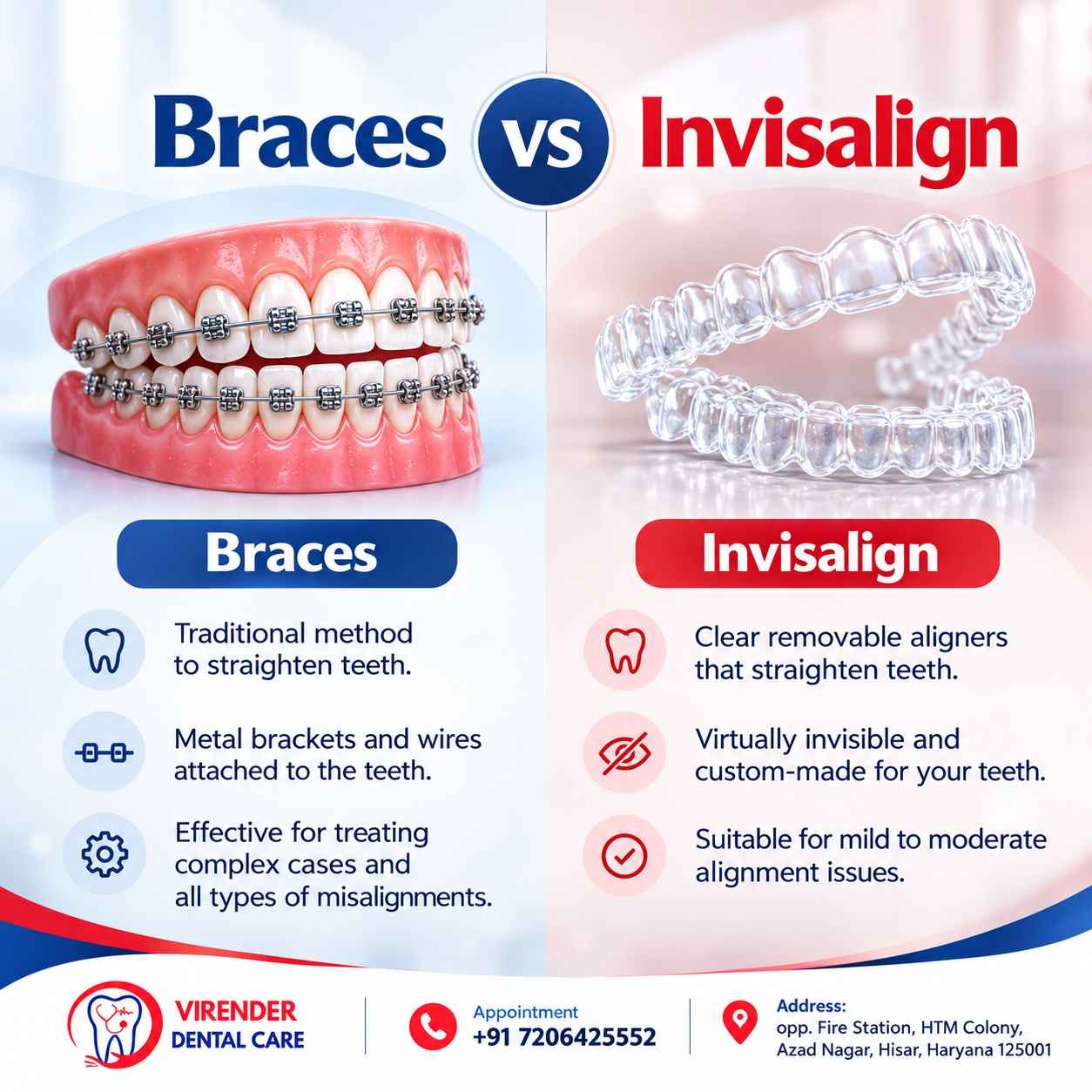
Straight teeth can improve your smile, make oral hygiene easier, and help correct certain bite problems. Today, two of the most popular orthodontic treatment options are traditional braces and clear aligners. If you are planning to straighten your teeth, you may naturally wonder: braces vs aligners which is better?
The answer depends on several factors, including the complexity of your tooth alignment, bite problems, age, lifestyle, treatment goals, and how consistently you can follow your dentist or orthodontist’s instructions. Both braces and clear aligners can effectively move teeth, but they work differently and may not be equally suitable for every patient.
Traditional braces use brackets attached to the teeth and orthodontic wires that gradually apply controlled pressure to move teeth into planned positions. Fixed braces remain attached to the teeth throughout treatment and are regularly adjusted as treatment progresses. Braces can be used to correct many orthodontic concerns, including:
Because braces remain fixed to the teeth, treatment does not depend on patients remembering to wear the appliance every day.
Clear aligners are custom-made, removable trays designed to gradually move teeth.
A patient typically wears a series of aligners, with each set moving the teeth incrementally according to the treatment plan. Clear aligners are removable for meals, brushing, and flossing, but they generally need to be worn for most of the day to work as prescribed. The American Association of Orthodontists notes that treatment suitability depends on the individual orthodontic problem and planned tooth movements. Their transparent appearance makes clear aligners especially popular among adults and teenagers who want a more discreet orthodontic treatment option.
When comparing braces vs aligners, there are several important differences to consider.
Treatment Duration: Patients frequently ask whether braces or clear aligners are faster. There is no fixed answer. Orthodontic treatment duration varies depending on:
Rather than choosing a treatment solely because it appears faster, it is better to choose the treatment that can provide appropriate and predictable results for your specific condition.
Both braces and clear aligners may be options for teenagers. Fixed braces can be useful when consistent aligner wear may be difficult because they remain attached to the teeth. Clear aligners may appeal to teenagers who are concerned about appearance and can responsibly follow the recommended wear schedule. The right option should be determined after evaluating tooth development, bite, alignment, and patient compliance.
Orthodontic treatment is not limited to children and teenagers. Adults can also undergo treatment if their teeth, gums, and supporting structures are suitable. Clear aligners are particularly attractive to many adults because they are discreet and removable. However, adults with more complex orthodontic needs may still benefit from fixed braces or another individualized treatment approach.
Yes, retention is an important part of orthodontic treatment. After teeth have been moved into their new positions, they may have a tendency to shift. Retainers are therefore commonly prescribed after both braces and clear aligner treatment to help maintain the corrected position of the teeth. Your dentist or orthodontist will advise you about how and when your retainers should be worn.
Neither treatment is automatically better for everyone. You may prefer clear aligners if you want:
You may be better suited to braces if:
The best decision should be based on a proper orthodontic examination rather than appearance or convenience alone.
If you are considering braces or clear aligners in Hisar, the first step is a detailed dental and orthodontic evaluation. At Virender Dental Care, Hisar, patients can consult the dental team to understand their tooth alignment, bite, and available orthodontic treatment options. Based on the clinical evaluation, an appropriate treatment plan can be recommended according to individual needs. Whether braces or clear aligners are suitable depends on the complexity of your case, oral health, treatment expectations, and other clinical factors.
The braces vs aligners decision should not simply come down to which option looks better. Traditional braces provide a reliable fixed approach and can treat a wide range of orthodontic problems. Clear aligners offer a discreet and removable alternative that may be suitable for many patients. The best way to know which option is right for you is to have your teeth and bite professionally evaluated and discuss your expectations with your dental professional. Straightening teeth is a personalized process, and the right treatment plan should focus on both dental health and long-term results.