Book your appointment online and secure your dental slot easily. Book Now
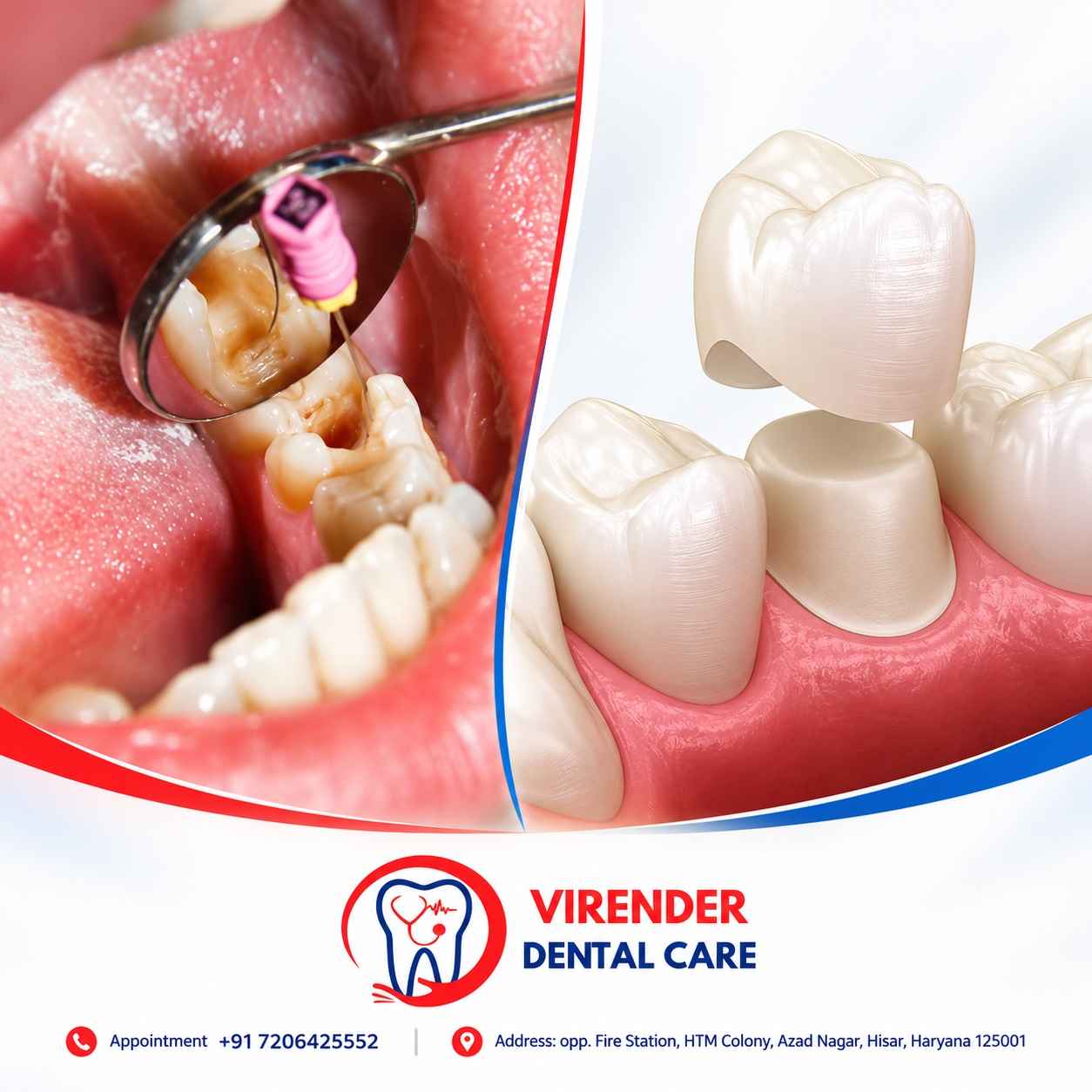
After completing a root canal treatment, many patients ask an important question: Do I really need a dental crown after RCT?
The answer depends on the location of the tooth, how much healthy tooth structure remains, the size of the previous filling or decay, and how much chewing pressure the tooth receives. In many cases, especially for back teeth, a dental crown after RCT may be recommended to protect the weakened tooth and help restore its normal function. However, not every root canal-treated tooth automatically requires the same type of restoration.
Understanding why crowns are commonly advised after root canal treatment can help you make a more informed decision.
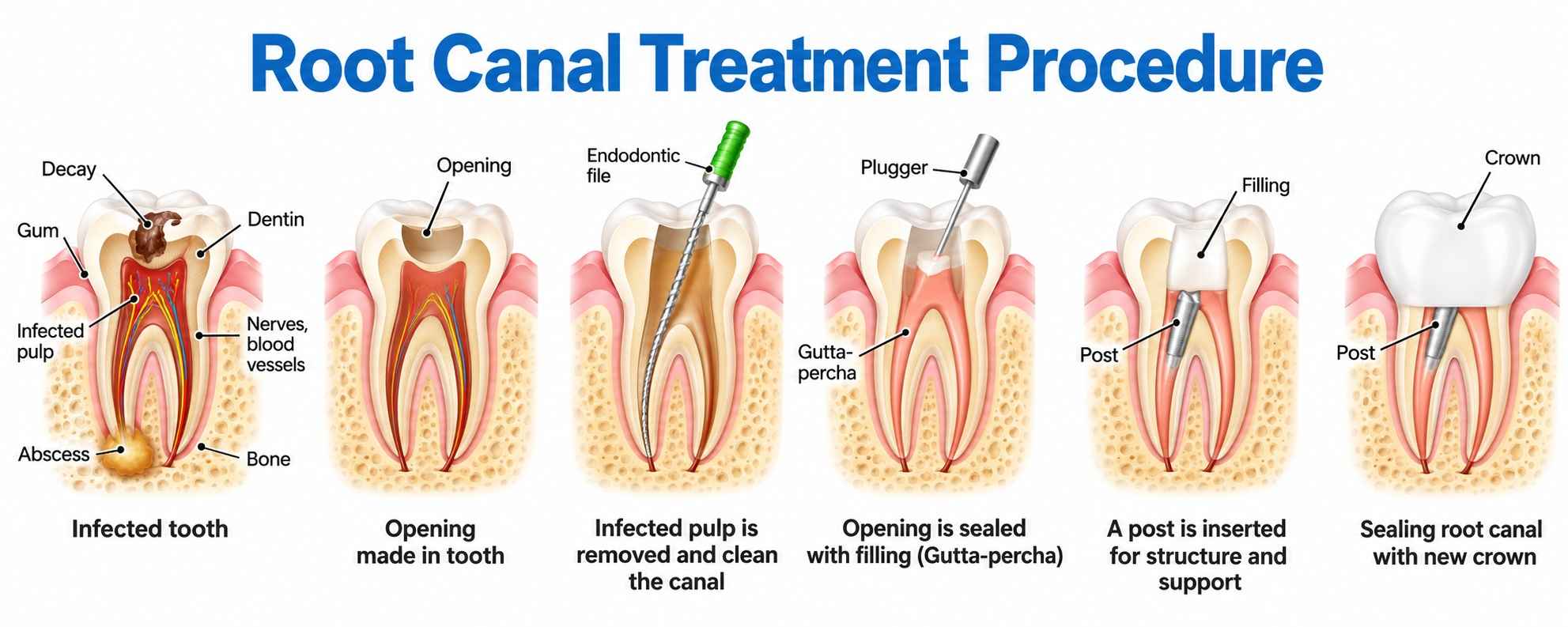
Root canal treatment is performed when the pulp inside a tooth becomes inflamed or infected because of deep decay, trauma, cracks, or other dental problems. During RCT, the dentist removes the damaged or infected pulp, cleans and disinfects the root canals, and seals them.
Although the infection is treated, the tooth may already have lost a significant amount of natural structure because of decay, fracture, previous fillings, or the access required for root canal treatment. This can make the tooth more vulnerable to cracking under chewing forces. That is why the final restoration is an important part of root canal treatment.
A dental crown is a protective cap placed over a damaged or weakened tooth. The main purpose of a dental crown after RCT is to protect the remaining tooth structure and restore normal chewing function.
A crown may help:
The need for a crown depends on the individual condition of the tooth.
No. Not every root canal-treated tooth necessarily requires a full crown. The decision depends on several clinical factors.
Front teeth generally experience different chewing forces compared with molars. If a front tooth has enough healthy structure remaining, the dentist may sometimes restore it with a bonded filling or another suitable restoration instead of a full crown. However, a crown may still be recommended if the tooth is heavily damaged, fractured, discolored, or has lost significant structure.
Back teeth are exposed to stronger chewing forces. Molars and premolars that have undergone root canal treatment may already be weakened because of large cavities or previous restorations. For this reason, a crown or another protective restoration is commonly considered for these teeth.
If your dentist recommends a crown but the tooth is left inadequately protected, there may be a higher risk of fracture. A root canal-treated tooth can sometimes crack while chewing, especially if a large amount of natural tooth structure has already been lost.
Possible problems may include:
This does not mean every tooth without a crown will break, but the risk should be evaluated carefully.
The timing of crown placement depends on the condition of the tooth and the treatment plan. In many cases, the dentist may recommend completing the permanent restoration after the root canal treatment has been successfully finished and the tooth is considered ready. Delaying the final restoration for too long may leave the tooth vulnerable to fracture or leakage. Patients should follow their dentist’s instructions regarding how soon the crown or final restoration should be completed.
If a temporary filling has been placed after root canal treatment, you should usually avoid placing excessive chewing pressure on the treated tooth until the permanent restoration is completed. Hard or sticky foods may increase the risk of damaging the temporary filling or weakened tooth structure. It may be advisable to chew on the opposite side until your dentist confirms that the tooth can be used normally.
Different crown materials may be recommended depending on the location of the tooth, bite, appearance requirements, remaining tooth structure, and treatment plan.
Common options may include:
Your dentist will recommend the most suitable option based on your clinical needs. For visible front teeth, appearance may be an important consideration, while for back teeth, strength and chewing forces may play a greater role.
Crown preparation is generally performed with local anaesthesia when needed, which helps reduce discomfort during treatment. The dentist shapes the tooth to create space for the crown and may take a digital scan or impression. A temporary crown may be placed while the final crown is being prepared, depending on the treatment method. Some mild sensitivity or gum tenderness may occur temporarily, but significant or persistent pain should be evaluated by your dentist.
There is no fixed lifespan for every root canal-treated and crowned tooth.
Longevity depends on factors such as:
With proper care, many restored root canal-treated teeth can function for a long time.
A crowned tooth still requires regular oral hygiene.
You should:
Although the nerve tissue has been removed from the tooth, the surrounding gums and supporting structures can still develop problems if oral hygiene is poor.
If you have recently undergone root canal treatment, your dentist should evaluate whether the tooth requires a crown or another permanent restoration. At Virender Dental Care, Hisar, patients can receive an assessment after root canal treatment to determine the most appropriate way to protect and restore the treated tooth. The recommendation depends on the location of the tooth, remaining tooth structure, chewing forces, and overall dental condition.
So, is a dental crown after RCT really necessary?
For many root canal-treated back teeth, a crown may be recommended because it helps protect weakened tooth structure from fracture and restores normal chewing function. However, some teeth may be successfully restored with other types of restorations depending on their condition. The right decision should be based on a clinical examination rather than assuming that every root canal-treated tooth requires the same treatment. If you have completed an RCT, ask your dentist whether your tooth needs a crown and how soon the final restoration should be placed.